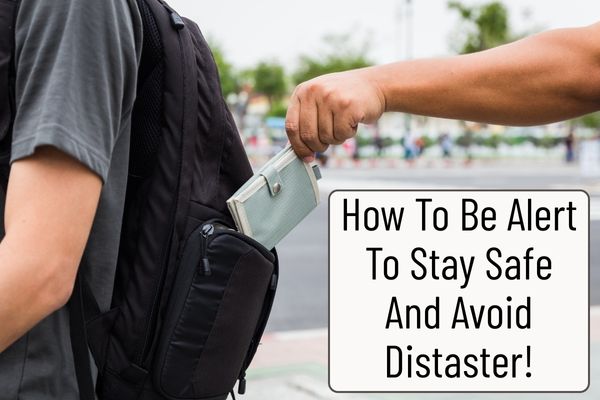
So, you’ve probably heard the term before, but do you really know what situational awareness means? And why is it such a vital tool for preppers?
Simply put, situational awareness is being aware of what’s happening around you, understanding what it means and knowing what to do if things go sideways.
If a natural disaster hits, or a peaceful protest quickly turns into a full-scale riot or a violent crime happens, would you be prepared?
Disasters and violence are unpredictable and being situationally aware will buy you time when every second counts. And your life just may depend on it.
The Fundamentals of Situational Awareness.
Observe, Orient, Decide, Act. This four-stage process, known as the OODA Loop, is essential to making effective decisions in rapidly changing environments by continuously cycling through the stages.
<1> Observation: Actively listening to and taking in information from your senses, like sights, sounds, and smells, to build a baseline of what is normal in your environment.
<2> Orientation: Processing that information and making sense of it by comparing it to your past experiences and existing knowledge. This involves understanding the “Big Picture” and your place within it.
<3> Decision: Based on your orientation, you weigh your options and decide on the best course of action to achieve the desired outcome, such as getting to safety.
<4> Action: Executing the decision you’ve made. This is the final step where you put your awareness into practice to respond to the situation.
Following this strategy will heighten your situational awareness and improve your chances of survival. Let’s break down what you need to know before, during and after a disaster strikes.
Before Disaster Strikes: Building Everyday Awareness
Most people start thinking about what they should do after something happens. Do NOT be like most people.
The best time to sharpen awareness is when your life is calm and predictable. This is where you build the habits that will help carry you through chaos.
Here are the most important things to focus on in the “before” stage.
<1> Know Your Baseline
Every environment has a “normal.” Normal sounds. Normal movement. Normal behavior.
When you know what normal looks like, abnormal things pop out like a neon sign. For example:
:: A quiet street suddenly becomes noisy.
:: A friendly neighbor starts giving you the cold shoulder.
:: A grocery store, usually well stocked, has empty shelves.
Not every abnormality is dangerous, but taking notice is the beginning of becoming situationally aware.
Prepper Tip:
Practice everywhere. Walk into a store and ask yourself, “What does normal look like here?”. Over time, you’ll pick up on patterns effortlessly.
<2> Reduce Auto-Pilot Mode
It happens to all of us. Driving home without remembering the trip, head down looking at your phone without noticing the people nearby.
Try to consciously reduce those times, because disasters, crimes and accidents happen while people are distracted.
You don’t need to be laser-focused all day, just try to eliminate moments of complete disengagement. Put the phone down while walking. Look around. Keep your ears open.
<3> Follow Cooper’s Color Code
What’s Cooper’s Color Code? Well, I’ll tell you.
Cooper’s Color Code, created by Marine Jeff Cooper, provides a simple way to gauge and improve your situational awareness. This system uses colors to describe different levels of alertness and readiness.
:: White – Unaware. Distracted. Not recommended outside your home.
:: Yellow – Relaxed but alert. Just paying attention to your surroundings.
:: Orange – Something feels “off.” Not a threat, but a potential one.
:: Red – A threat is real. You’re ready to act.
:: Black – Overwhelmed or panicked.
You should look to spend most of your time in Yellow, occasionally drifting into Orange when something triggers concern. Red is rare, and Black, well, being situationally aware will help prevent that.
Prepper Tip:
Think of it like a dimmer switch, not an on/off button.
<4> Create Mental Checklists
Pilots use checklists because they work. So should you.
To help strengthen your situational awareness, put together simple question lists and check them off in your head when you enter new places, like:
:: Where are the exits?
:: Who’s around me?
:: What’s the vibe? Calm? Tense? Off?
:: What would I do if something happened right now?
Your brain is much faster under pressure when it has seen the scenario before.
<5> Trust Your Gut
When you get a feeling about something, embrace it. Your brain notices patterns long before you do. That’s your subconscious analyzing subtle cues and looking out for you.
Remember there’s a balance though. When something feels off, pause, scan your environment, and reassess. Not every fire alarm means there’s a fire.
During Disaster: Awareness That Keeps You Alive.
This is where situational awareness becomes more than a just good habit. It becomes a vital survival skill.
A crisis is where clarity and quick thinking matter most, whether it’s a natural disaster, major accident, home invasion or random violence.
Take note of these important steps to stay sharp when your adrenaline rises.
<1> Control Your Breathing
Panic narrows your vision, muffles your hearing, and impairs your thinking. It pushes you toward panic, where you do not want to be.
A single ten-second breathing cycle can help restore a sense of calm:
<a> Inhale for 4.
<b> Hold for 2.
<c> Exhale for 4.
This resets your focus, allowing you to think clearly and strategically instead of acting blindly.
<2> Assess The Situation Before You Act
Your instinct will be saying to “do something,” but the wrong action can be worse than no action. Take in your surroundings and ask yourself these three big questions:
:: What’s happening?
:: Is it getting better or worse?
:: What do I need to do right now?
Your job in this moment is triage, not solving everything. Your focus here will be on preventing the situation from getting worse.
<3> Expand and Contract Your Focus
Situational awareness works like a camera lens. Sometimes you need wide focus or a “Big Picture” view. And sometimes you need narrow focus, for solving a specific problem.
Most people get stuck in one mode and can’t pivot. Some zoom way out and freeze because things become too overwhelming. Others focus too narrowly and miss bigger dangers.
Train yourself to shift between focuses deliberately:
:: Wide: What’s the overall threat?
:: Narrow: What’s my next step?
:: Wide: Is anything changing?
This prevents tunnel vision and keeps you adaptable.
<4> Watch for Secondary Threats
One disaster often triggers another and being situationally aware of compounding threats is instrumental to your survival. For example:
:: After an earthquake, gas leaks and fires are common.
:: After a tornado, downed power lines can be fatal.
:: After a riot begins, crowds can act unpredictably.
During a disaster, stay open to the idea that danger may evolve.
<5> Keep Communications Clear and Simple
Whether you’re with family, neighbors or strangers, clear communication reduces confusion and panic. Be sure to use:
:: Short instructions.
:: Calm tone.
:: Obvious, non-technical language.
Make sure everyone understands what’s happening and what the next steps are.
<6> Continually Reevaluate Your Plan
One of the biggest mistakes in a crisis is sticking to a plan that isn’t working.
Situational awareness means staying flexible. Conditions change. Threats move. New information appears.
The question you repeat is:
“Does my plan still make sense based on what’s happening?”
If not, shift. Adaptability is survival.
After Disaster: Staying Aware in the Aftermath.
The end of the initial crisis doesn’t mean the danger is over. Unfortunately, the aftermath often brings new challenges, sometimes even bigger ones.
Situational awareness after a disaster helps you avoid getting hurt when you’re exhausted, emotional or eager for things to “go back to normal.”
Here’s what to look out for.
<1> Don’t Rush Into “Recovery Mode”
It’s natural to want to pick up the pieces immediately. But rushing can lead to injuries, missed dangers or bad decisions. Take a moment to reassess:
:: Are there hidden hazards?
:: Is the environment stable?
:: Is it safe to begin cleanup or travel?
Think slowly. Move slowly. Act smart.
<2> Be Aware Of Other Peoples’ Behavior
Crisis changes people. Most become kinder, some become desperate and a few could become dangerous. Watch for:
:: Unusual aggression.
:: Panic.
:: Opportunistic theft.
:: Scams or false information.
:: People making impulsive decisions that could harm others.
You don’t need to be suspicious, just aware.
<3> Monitor Information Carefully
In the aftermath of disasters, misinformation spreads faster than truth.
Use multiple reliable sources. Compare what you’re hearing. Check for inconsistencies.
And remember, not every rumor deserves your attention.
<4> Avoid “Survival Fatigue” Traps
After a high-stress event, your brain hits a wall. You may feel:
:: Tired.
:: Foggy.
:: Overconfident.
:: Emotionally drained.
This is when accidents happen, like stepping on a nail during cleanup or making a poor travel decision.
Situational awareness in the aftermath is mostly about slowing down and staying mindful.
<5> Reevaluate Your Surroundings Frequently
Threats after disasters shift quickly:
:: Roads become dangerous.
:: Power lines spark.
:: Water becomes contaminated.
:: Crowds gather or disperse.
:: Infrastructure weakens.
Situational awareness means checking conditions regularly, not just initially.
<6> Debrief The Situation
Afterwards, looking back on what just happened will help you better prepare for future emergencies. Ask yourself:
:: What went well?
:: What didn’t?
:: What surprised me?
:: What did I miss?
:: What would I do differently next time?
Arm Yourself With Situational Awareness.
During times of crisis, circumstances can change faster than you can possibly imagine. Danger lurks at every turn and every choice you make could become a life or death decision.
But if you truly learn the information presented here, you will be armed with an incredibly powerful survival tool and be prepared for when disaster strikes.