You know the effectiveness of firearms as a tool of protection for your family. But safety is key And there are essential methods for ensuring the responsible handling of firearms to help keep everyone safe.
Integrating Firearms into Your Overall Prepping Strategy
There are many different types of firearms suitable for prepping needs from handguns and shotguns to weapons more suited for hunting and long-range defense. Careful consideration is necessary when thinking about acquiring a gun for the protection of your family.
The first step is to evaluate the possible scenarios and select the appropriate firearms to buy to protect your shelter, possessions, and most importantly, family. Consider the different security issues one might face and what defense strategy you might put into place.
Defending Family and Possessions With Firearms
A firearm is a self-defense weapon that may save your life from a threatening scenario or to help with hunting when food is critical for survival.
Firearms must be safely stored yet be readily accessible for quick access for immediate, unexpected use during a dangerous scenario. In other words, while it can be helpful to add it to your prepper supply, you need to know how to safely store it.
The Importance of Prepper Firearm Safety
While it’s good to be prepped and ready to face unexpected emergencies and disaster scenarios with confidence, preppers must practice firearm safety. As with all prepper supplies and tools, you need to know how to use them. Proper safety training and applicable certifications for firearms is a must-have step during prepping. Some states even require a safety certificate before buying a gun to help promote safe gun use and reduce accident rates.
There are staggering numbers of firearm accidents that occur from both handling mistakes and the result of unauthorized access to firearms. Preppers are urged to safely store and lock weapons to eliminate the risk of getting into the hands of others, especially children. Preppers should look into firearm safety courses to gain knowledge and training to handle firearms confidently and responsibly. Aim to learn everything from safety basics to local laws and regulations. Consider meeting with local prepper groups to gain additional knowledge and insights into firearm safety.
Firearms Training as Part of Prepping
As for firearms training, practice makes perfect. Preppers should devote the necessary time to improve proficiency and develop firearm muscle memory. Regular training and practice at a shooting range is essential to perfecting firearm skills and building shooting confidence. When you purchase a firearm, familiarize yourself with its specific features for accurate shooting. Read the manufacturer’s manual carefully. The more you know about your firearms like the recoil, trigger pull, and sight picture, the better you’ll safely handle the firearm. This includes knowing how to properly load and unload ammunition.
Here are a few methods of firearm training:
:: Dry fire practice
:: Live fire drills
:: Scenario training
Dry Fire Practice
Dry fire practice means that you practice without live ammunition. This method is ideal for improving skills. Even as little as 15 to 20 minutes per day can yield improvements as you gain skills with trigger control, sight alignment, and firearm handling.
Live Fire Drills
Live fire drills is experience using real ammunition. The method of drills helps to improve firearm accuracy from a variety of shooting positions like sitting, standing, kneeling, even one- handed shooting. By gaining skills with your stance, grip, and trigger control, you elevate your firearm readiness.
Scenario-Based training
Scenario-based training is vital for preppers looking to sharpen decision-making under pressure as well as situational awareness in times of threats. By training for different situations, you can build mental toughness.
Proper Storage of Firearms is Critical to Safeguarding
When it comes to proper storage, there are a few areas of safeguarding that preppers must consider:
<1> Protecting firearms from unauthorized access, especially out of the hands of children
<2> Protecting your firearms from theft and looting during a disaster scenario
<3> Storing your firearms but making them easily accessible when you need to use them
That means there’s more to just safely storing firearms. During a survival situation, you’ll also need quick access to your firearm storage location so you can easily retrieve them. So, during a crisis, firearms need to be secure but accessible.
Firearm Storage Types and Safety Devices
There are many types of reliable firearm storage solutions to prevent unauthorized access. Before you run out and buy the first storage unit that you see, do some research to see what matches your firearm needs.
Storage types and safety devices include:
:: Wall and floor safes
:: Gun cabinets
:: Gun cases
:: Trigger and cable locks
Wall and Floor Safes
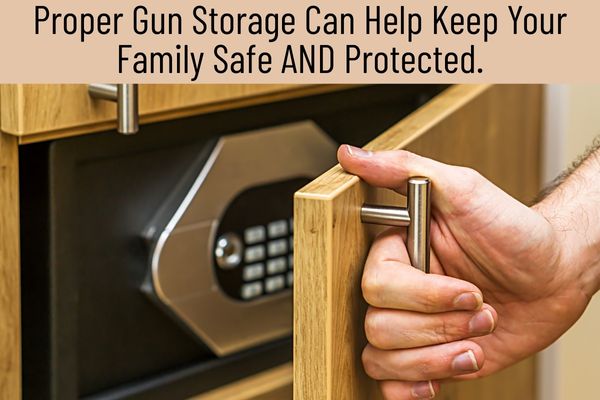
Wall and floor safes offer a secure option for concealed storage of firearms, ammunition, and other valuable essentials because they are large, heavy, and offer the ultimate protection against unauthorized access, theft, damage, and fire. Gun safes are typically secured with a combination lock, biometric scanner, or electronic keypad, providing a blend of secure storage with quick access to firearms.
Gun Cabinets
Gun cabinets are also concealed storage but can be a more affordable option to a large wall or floor safe. Typically made of sturdy metal or wood, this storage features a traditional lock and key system.
Gun Cases
Gun cases are made of hard or soft materials, portable firearm storage solutions designed for easy transport and carry. The drawback is that this storage method offers reduced protection against unauthorized access.
Trigger and Cable Locks
In addition to safe storage of firearms, trigger and cable locks add extra security measures to prevent the gun from being loaded with ammunition and fired or discharged accidentally. These methods are simple, affordable and provide an additional layer of safeguarding of your stored firearms.
Properly Storing Ammunition is Equally Important During Prepping
Preppers also need to properly store and maintain ammunition. Aim to store ammunition in a cool, dry location, away from heat, direct sunlight, or flammable sources. Always inspect your ammunition and dispose of any ammunition with visible signs of damage to prevent accidents. As you would do to any of your stored prepper essentials, rotating your ammunition supply is also important so you use the oldest ammunition first. Note the date on each ammunition container so you can monitor its reliability.
Firearm Safeguard Tip 1: Treat Every Gun as if it Were Loaded
The most important rule of gun safety is always to treat a firearm as if it were loaded. Even when a gun is unloaded, you should still handle it with care. Unfortunately, many accidental discharges happen because a person assumed a gun was unloaded. By consistently treating all firearms as loaded, gun owners can reduce the risk of injury or death.
Firearm Safeguard Tip 2: Keep Your Finger Off the Trigger
A major critical rule in firearm safety is to keep your finger off the trigger until you spot the target and you’re ready to fire. This reduces the risk of accidental discharges. Always position your index finger along the firearm’s frame, outside of the trigger.
Firearm Safeguard Tip 3: Always Point the Muzzle in a Safe Direction
A huge warning is to never point a firearm muzzle anywhere but at your target or in a safe direction when not planning to shoot. Should a malfunction occur, an accidental discharge could result in inflicting unnecessary harm or damage. Always maintain control of the muzzle’s direction.
Firearm Safeguard Tip 4: Check For a Misfire, Hangfire, or a Squib
You should always consider misfires as a potentially dangerous situation and proceed cautiously. Misfires are a malfunction when the ignition fails, resulting in the failure to discharge a bullet. In the event of a misfire, it is essential to follow proper protocols to ensure your safety. Keep the firearm pointed in a safe direction for an extended period, known as “hangfire.” A hangfire occurs when the cartridge discharges following a significant delay. A squib is when the bullet gets lodged in the bore of the firearm. After sufficient time has passed, carefully remove and dispose of the faulty round following the manufacturer’s guidelines.
Firearm Safeguard Tip 5: Regularly Clean and Maintain Firearms
Preppers know the importance of always being ready for anything and that translates to keeping your firearms in optimum working condition. Proper cleaning, lubricating, and maintenance of firearms are essential for safe operation. Use appropriate cleaning solvents, lubricants, and cleaning tools recommended by the manufacturer. Regular firearm inspections are crucial so check for dents, cracks, damage, wear and tear. Lack of regular firearm maintenance could lead to a dangerous malfunction.
Remember, each firearm comes with specific guidelines and instructions from the manufacturer. It is essential to read and follow these instructions carefully. Every firearm is different, and it is crucial that owners understand how their specific guns operate. Misunderstanding a firearm’s mechanics can lead to accidental discharges and unsafe handling.
Proper Handling, Storage, and Maintenance Helps Safeguard for securing firearms while allowing Your Firearms
Following a few key methods of safeguarding firearms, can help keep you and your family safe and protected. There are many good firearm storage options that allow for quick access when you’re facing danger. The goal of safeguarding your firearms should be to give you peace of mind knowing your firearm is safe and secure and ready for you should you need it.