Even if you never used one before, odds are you know what a snare trap is. Either you’ve heard the term or you’ve seen them used in movies like Predator, Saw and believe it or not, even Home Alone.
Snare traps have been around for hundreds of thousands of years, dating back to Middle Stone Age times, and were used in nearly every region of the world. They helped keep our ancestors fed, warm and alive.
Today, same as then, snare traps are one of the most reliable, lightweight, and low-energy survival tools available. And knowing how to use them may just save your life one day.
Let’s walk through what snare traps are, why they matter, different types, where to set them, how to make them, how to use them responsibly and key mistakes to avoid.
The Snare Trap And How It Works
Before diving in, it’s important to understand the basics.
Simply put, a snare trap is:
:: A loop,
:: Attached to a trigger point,
:: That tightens as the animal pulls against it.
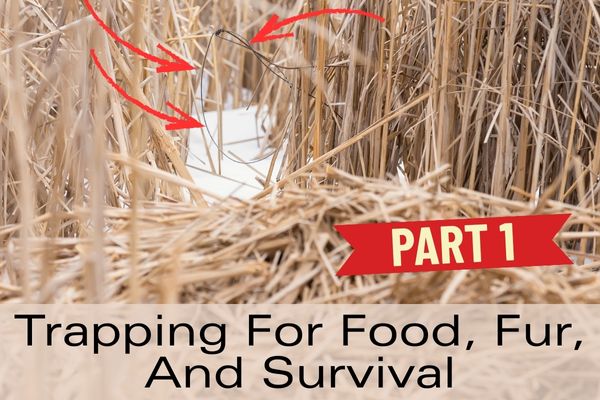
The wire loop is set in a spot the animal is likely to pass through, usually a narrow path or “run.” When the animal moves through it, the loop closes around a part of its body, usually the neck or leg, and prevents escape.
There are different levels of complexity, but the core concept remains the same: a snare trap is a noose that tightens when tension is applied.
Why Snare Traps Matter in Survival Situations
When you think about survival, your mind probably immediately goes to building a shelter, starting a fire or making sure you have clean water to drink.
Those are vital skills for sure, but there’s something else just as important. Where is your food going to come from, especially in long-term survival scenarios.
In a true emergency, calories are currency. When you’re cold, exhausted or injured, the last thing you want to do is burn precious energy running around trying to hunt down a rabbit or squirrel.
Snare traps solve that problem by becoming passive hunters. You set them, walk away and let them do the work.
Here’s why snares are favored by preppers:
<1> They’re Lightweight and Portable
A small coil of snare wire weighs almost nothing. You can fit a dozen snares in a shirt pocket. Compare that to the bulk and noise of firearms or the skill required for primitive hunting weapons like a bow and arrow and the snare start to look like your best friend.
<2> They’re Low-Energy
Once the snare is set, it works 24/7 without you lifting a finger. When you’re trying to conserve energy, this is a huge advantage.
<3> They’re Highly Effective
When placed correctly, a snare can bring in small game consistently and reliably. Rabbits, squirrels, ground-dwelling birds and even mid-size animals like raccoons can all be taken with properly built snare traps.
<4> They Work for Food and Fur
While most people think about snares for meals, they can also provide fur for warmth. In winter survival scenarios, a rabbit pelt can mean a warmer pair of gloves, something that can make a life-or-death difference.
<5> They’re Easy to Learn
You don’t need years of hunting experience to operate a snare. With practice and good judgment, a beginner can quickly get up to speed.
Types of Snare Traps
Not all snares are alike. Different traps serve different purposes depending on the animal you’re targeting and the terrain you’re in. These are the most commonly used snares in survival situations.
<1> The Simple Ground Snare
This is the classic rabbit or squirrel snare, just a wire loop staked to the ground. That’s it.
Best for: rabbits, squirrels, ground birds.
Pros: quick to build, requires minimal material.
Cons: animals can twist or chew free if the wire is weak.
<2> The Spring Snare
This snare uses a bent sapling or branch as a spring-loaded engine that lifts the animal off the ground when triggered (think Home Alone). It keeps the animal suspended, preventing escape and protecting the body from predators.
Best for: rabbits, raccoons, ground birds.
Pros: prevents chewing escape.
Cons: requires more setup time and a good trigger mechanism.
<3> The Survival Tension Snare
This is similar to a spring snare but crafted specifically for speed and reliability. It’s often combined with commercially made wire snares for more durability.
Best for: small to medium-sized game.
Pros: very effective in long-term survival.
Cons: depends heavily on natural materials available.
<4> The Deadfall Snare Combo
A hybrid trap that pairs a snare mechanism with a weighted deadfall (more on that in Part 2 of this series). It’s less common, but useful when targeting larger animals.
Best for: raccoons, porcupines.
Pros: increases probability of a quick kill.
Cons: time-consuming and riskier to set up.
<5> Larger Snares for Bigger Game
In a true survival scenario, preppers sometimes consider mid-sized animals like foxes or even larger animals. But these snares come with serious ethical and legal considerations, which we’ll talk about later.
Where to Set a Snare Trap: Understanding Animal Behavior
A snare is only as good as its location. You can have the best wire, the perfect loop size and a textbook trigger, but if you set it in a place where animals rarely travel, it’s going to catch you nothing but air.
To choose the right spot, look for:
:: Animal Trails (“Runs”)
These are narrow, beaten-down paths in grass, brush or snow. Rabbits and small animals use the same trails over and over.
:: Funnel Points
Look for spots where natural features guide animals into a narrow opening, like between logs, under fences, along rock walls or through gaps in thick brush.
:: Feeding Areas
Near berry patches, clover fields, nut-producing trees or water sources (personal favorite).
:: Burrow Entrances
Rabbit dens, squirrel tree bases and burrows of small mammals are high-traffic areas, but you’ll want to take caution. Setting snares too close to a den may scare off your target.
:: Tracks and Droppings
Fresh signs of life are your best indicators. If the tracks are clear and recent, a snare set nearby has a higher chance of success.
Materials You Need For Effective Snare Traps
You don’t need much to build a snare, but you do need quality materials. Here’s what you should have to get started:
Wire or Cable
Galvanized steel wire in the 22-28 gauge range is typical for small animals. For commercial survival snares, stronger cables (1/16” or 3/32”) are used.
Knife or Multitool
To cut and shape the wire.
Cordage
Paracord (parachute cord) or natural cordage to attach the snare or spring mechanism.
Anchor Stakes
Strong sticks or metal stakes to secure the snare firmly.
Optional: Commercial Snares
These offer pre-made loops and swivels, which reduce animal twisting and escape. Knowing how to build your own snare is best though as you never know when you may need one.
Step-by-Step: Building a Basic Rabbit Snare
Let’s go through a simple setup to get the idea across. This isn’t the only method, but it’s one of the most accessible.
<1> Cut 20-24 inches of snare wire.
<2> Make a small loop at one end (around ¼ inch), twisting tightly.
<3> Thread the opposite end through that loop to create the noose.
<4> Form a loop roughly the size of your fist (about 4 inches).
<5> Find a well-used animal “run.”
<6> Attach the snare to a strong anchor stake.
<7> Position the loop at head height for your target, usually 3-4 inches off the ground.
<8> Narrow the path with sticks or brush so the animal naturally heads straight into the opening.
Once the animal moves through and tightens the loop, the snare will hold.
Being Ethical, Legal, and Prepared
Snaring animals isn’t something you do casually. In many regions, snares are heavily regulated or outright illegal, because they can unintentionally trap protected species.
In a true survival situation, legality takes a back seat to survival. But during normal circumstances, practicing snaring must be done responsibly.
Always check your local laws.
Many areas require permits, prohibit certain wire types or ban snares outside of emergency scenarios.
Never leave snares unattended for long.
Check them frequently and never leave an animal suffering.
Know how to dispatch an animal humanely.
This is a skill every prepper must understand.
Ethics and preparedness go hand in hand. A responsible prepper plans not only for survival, but also for the welfare of the environment and the animals within it.
Common Mistakes Made With Snares
Even experienced woodsmen slip up sometimes. Here are some pitfalls to avoid:
:: Using the wrong wire gauge
Too light and the animal escapes. Too heavy and the snare won’t close properly.
:: Poor scent control
Animals, especially rabbits and foxes, can detect human scent easily. Rub your snares with dirt or vegetation to mask your smell.
:: Setting snares in random locations
Random placement equals usually poor results.
:: Oversized loops
Beginners often set loops too big, allowing small animals to pass through without triggering.
:: Not securing the anchor properly
If the stake or cordage gives way, the animal simply walks off with your snare.
:: Using only one snare
In survival situations, more is better. Ten snares dramatically increase your odds compared to one lonely trap.
The Snare Trap – A Low Tech Way To Get Food On The Table
In a world full of high-tech gear, it’s often the simplest tools that keep us alive. And that’s the snare trap. With it, you can secure food, gather fur and give yourself a genuine survival advantage without wasting precious energy.
It’s not glamorous, but in a real survival scenario it’s a skill that can literally feed you, keep you warm, and carry you through tough moments.