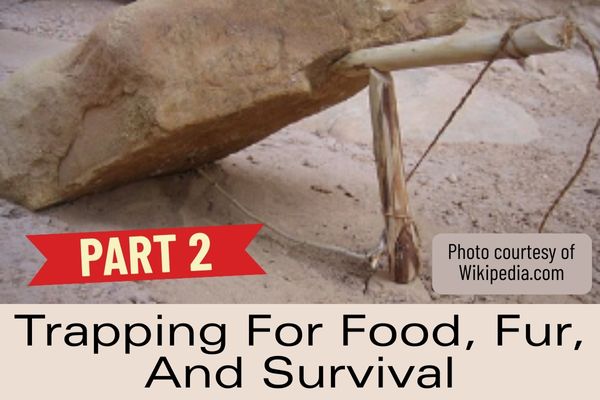
So, on the off chance you never heard of a deadfall trap, you can probably piece together what it is just by hearing the name.
The deadfall is a gravity-based trap that uses a heavy weight (like a rock or log) held up by a delicate trigger mechanism. And it’s released when an animal disturbs the bait or a trip line, causing the weight to fall and crush the prey.
First used by prehistoric hunters, deadfalls are one of the oldest and most reliable survival tools known to man. They helped keep our ancestors fed, warm and alive for thousands of years and they can do the same for you once you know how to use them properly.
Simple and quiet, deadfalls work around the clock once set. While you sleep, gather firewood or secure your shelter, the deadfall becomes your best friend in the background.
Let’s take a closer look at deadfalls … how to set them, different types, placement and their legal, ethical and safety considerations.
Why Deadfall Traps Matter for Survival
If you ever find yourself in a real survival situation, whether short-term after a disaster or long-term in the wilderness, life or death may just depend on your knowledge of the deadfall trap.
One of the oldest hunting tools in human history, here’s why deadfalls are still so vital today:
<1> They’re low-tech and reliable.
When technology fails, ammo runs out or your gear breaks, a deadfall trap still works. You don’t need metal springs, manufactured parts or precision tools. A knife, some cordage and knowledge are all it takes.
<2> They let you hunt passively.
Unlike stalking prey or sitting silently for hours with a rifle, deadfall traps work 24/7 while you’re doing other things. One trap becomes a second pair of hands. Ten traps become a small hunting team.
<3> They can provide food and fur.
In a true survival scenario, fur matters. Small game pelts from rabbits and squirrels can keep you warm, which could be just as important as calories.
<4> They help conserve your energy.
In a survival situation, burning more calories than you take in is a fast track to exhaustion. Trapping lets nature come to you.
<5> They’re discreet.
If you’re in a situation where you need to keep a low profile, deadfalls make far less noise than firearms.
Deadfall traps aren’t glamorous. They’re not high-tech. But they remain one of the most dependable survival tools in a prepper’s arsenal.
The Basics of Setting a Deadfall Trap
<1> Choose the Right Location.
Even a perfect trap won’t catch anything if it’s in the wrong place. Before carving sticks, scout the area for signs of animal activity:
:: Small tracks or worn trails
:: Droppings
:: Chewed plants or nuts
:: Burrows or shelter spots
Look for narrow paths, log edges and natural funnels. Places animals already travel.
<2> Pick a Proper Deadfall Weight.
Your “deadfall” is the heavy object that does the work. It needs to be:
:: Heavy enough to kill instantly
:: Large enough to cover the kill zone
:: Stable enough to set safely
Flat stones, thick logs or even a slab of bark can work. The key is finding the right weight while maintaining stability.
Here’s a quick guide:
Target Animal Weight Notes
Mice, Small Rodents 2-5 lbs. A stone slab works best.
Squirrels, Chipmunks 5-10 lbs. Larger flat rock or thick log.
Ground Birds (Quail, Grouse) 10-15 lbs. Aim for a broad impact area.
Rabbits 10-20 lbs. Heavy log section or wide stone.
Important: More weight is not always better. Too much force can scatter or destroy the animal, damaging usable meat or fur. Too little force may injure the animal without killing it, which is inhumane and unsafe.
<3> Build Your Trigger System.
Most beginners start with one of two classic triggers:
Figure-4 Trigger
A three-stick design that forms the shape of a “4” when assembled. It requires careful notching but holds the deadfall securely until disturbed.
Paiute Trigger
Uses a toggle stick and a piece of cordage. It’s easier to make, extremely sensitive, and great for smaller animals.
Whichever you choose, the trigger should collapse the moment an animal touches the baited stick.
<4> Bait It Smartly.
Use small amounts of bait, just enough to force the animal to nudge or pull at the trigger stick.
Common baits include:
:: Peanut butter
:: Nuts or seeds
:: Apple or carrot pieces
:: Oats or grains
Place the bait under the deadfall, on the trigger itself or in a position that makes the animal commit fully to the trap.
<5> Set It Carefully.
This is the part that requires patience.
:: Keep your fingers out from under the weight at all times.
:: Make sure the deadfall is balanced and stable.
:: Test the trigger’s sensitivity. Too firm and nothing will trip it. Too loose and the trap collapses early.
Once set, the trap should look natural and not put your potential next meal on high alert.
More on the Two Classic Deadfall Types
<1> The Figure-4 Deadfall
Uses three sticks notched together in a way that forms a self-supporting figure 4 structure. When an animal nudges the bait stick, the structure collapses and the weight drops.
Why preppers love it:
:: No cordage needed.
:: Very stable when built correctly.
:: Easy to reset once built.
:: Can be carved with just a knife.
Drawbacks:
:: Requires precise notches.
:: Time-consuming for beginners.
:: Not as sensitive as other designs.
The Figure-4 is perfect for when you have time to carve your components carefully and want a sturdy, dependable trap.
<2> The Paiute Deadfall
A favorite among wilderness survival instructors. It uses cordage (paracord, natural fiber, even shoelaces) and a toggle stick to create a highly sensitive trigger.
Why preppers love it:
:: Very sensitive trigger, excellent for small game.
:: Safer to set than the heavier Figure 4.
:: Faster to build once you’ve mastered the technique.
:: Easier for beginners to learn than the Figure-4.
:: Adaptable to uneven terrain.
Drawbacks:
:: Requires cordage.
:: Slightly harder to set under windy conditions.
The Paiute is the deadfall you use when you want precision.
Placement: The Secret to a Successful Deadfall
Even the best trap won’t work if you put it in the wrong place. Successful trappers spend more time studying their environment than carving sticks.
Here’s what to look for:
<1> Game Trails
Animals follow the same paths repeatedly. Look for:
:: Worn paths in grass or dirt
:: Droppings
:: Tracks
:: Fur caught on branches
Place traps where trails narrow, turn or funnel.
<2> Natural Cover
Animals feel safer under shelters like:
:: Brush piles
:: Fallen logs
:: Rocky overhangs
These spots also protect your trap from the wind.
<3> Water Sources (my personal favorite)
Rivers, streams and ponds are wildlife magnets. Set traps:
:: 10-20 feet from the water’s edge
:: Along natural animal “entry points”
<4> Den Entrances
Exercise caution, but burrow openings often guarantee animal traffic. Never block the entrance completely, just place traps slightly off to one side.
<5> Food Sources
If you find nuts, berries, mushrooms or seed pods in abundance, odds are something is eating them.
The rule is simple: Find the animals first, then set the trap, not the other way around.
How Many Deadfalls Should a Prepper Set?
More traps = higher odds. Veteran trappers often say:
“One trap is a wish. Ten traps are a plan.”
For short-term survival, aim to set:
:: 5-10 traps for small game
:: 10-20 traps for food scarcity or winter conditions
Spread them out across different habitats. Think of it like diversifying your food sources and increasing your chances of a successful score.
Legal and Ethical Considerations
Deadfall traps are super-effective, but they also come with great responsibility.
Check Your Local Laws
In many U.S. states, using deadfall traps for hunting is illegal except in genuine survival emergencies. Others allow trapping during specific seasons, but deadfalls may be prohibited due to their lethal nature.
As a prepper: Learn the laws before you head into the woods.
Check Traps Frequently
In a survival situation, check your traps every few hours, and minimally twice per day.
Failing to do so leads to:
:: Lost food as predators steal your catch
:: Animal suffering (you never want to let this happen)
:: Damage to useful pelts
Avoid Over-Trapping
Even in emergencies, you should never over-exploit wildlife in a given area. General rule of thumb: trap only what you need.
Safety Considerations for Preppers
Deadfall traps are simple, but they’re not toys.
<1> ALWAYS keep your hands out from under the deadfall.
A 20-pound rock dropping on your fingers in the wilderness is a survival emergency waiting to happen.
<2> Use stable bases and secure trigger points.
A gust of wind or a sloppy notch can prematurely drop the weight.
<3> Practice before you need it for real.
A survival scenario is not the time to figure out what makes a Paiute trigger release smoothly. Practice often using non-lethal methods on private property.
<4> Wear gloves when handling dead animals.
Small game can carry parasites or diseases. Treat every carcass as potentially contaminated.
The Deadfall Trap … A Survival Tool
Deadfall traps are one of the most powerful survival tools at your disposal, anywhere, anytime.
In a true survival situation, deadfalls give you a simple, low-effort way to secure food when you can’t rely on constant hunting. They can also get you fur for warmth, bedding, and protection from the elements.
And once set, they work for you 24/7 in the background. When modern conveniences can disappear overnight and gear can fail, having the knowledge and skill to build a deadfall can make all the difference when your life hangs in the balance.