
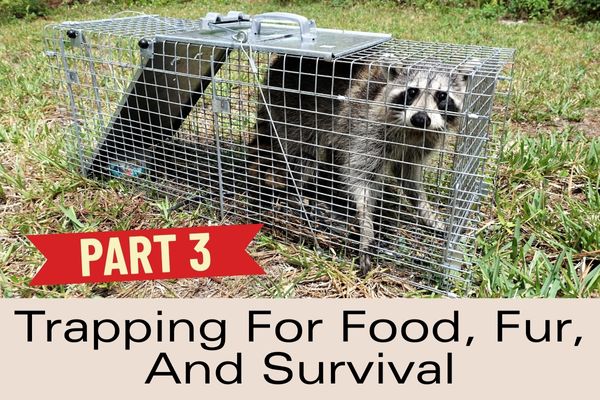
In this third and final trapping installment, we’re going to discuss a trap that takes a much different approach than the snare and deadfall, but one that is just as effective if not more.
We already talked about the snare trap, which generally causes strangulation or injury to the animal and the deadfall trap which delivers a lethal blow. But with the cage trap, you have a humane trapping solution.
That’s right. A cage trap, also known as a live trap or box trap, is a rigid enclosure, usually made of wire mesh or wood, designed to capture an animal alive. The animal enters the trap to access the bait, triggers a mechanism and a door closes behind it.
Simply put, the cage trap does not rely on injury or killing force to function.
Cage traps have been used for centuries in various forms. Early versions were often just wooden box traps with simple gravity doors or spring sticks. Modern versions are typically galvanized wire cages with weight-sensitive plates and spring-loaded doors, but the principle remains unchanged.
The defining feature of the cage trap is control. Control over what is caught, how it’s caught and what happens next. And it can help keep you fed, warm and alive when you know how to properly use it.
Let’s walk you through everything you need to know about this essential survival tool, including why it stands out, why it’s better for food and fur, how to make it, where to set it, ethical responsibilities and more.
Why Cage Traps Stand Out in Survival Scenarios.
Live Animal Trapping
Because they allow you to capture live animals, cage traps provide flexibility, minimize harm to non-target animals and maximize your management of resources.
This makes them a more sustainable option compared to other traps.
They are especially valuable because:
:: They allow for selective harvesting
:: They can be checked without immediately killing the animal
:: They are reusable and durable
:: They are generally more humane than other traps
Passive Food Collection
One of the greatest advantages of trapping, especially in survival situations, is that it works while you’re doing other things. Around the clock, 24/7, a well-placed cage trap can gather food while you:
:: Gather firewood
:: Build shelter
:: Tend a garden (Bonus: they can also be placed in your garden to stop animals from walking off with your harvest.)
:: Rest or recover
The passive nature of the cage trap working in the background helps you conserve energy, which in turn saves calories, which is critical to survival.
Low Risk, High Control
Unlike hunting, trapping doesn’t require:
:: Ammunition
:: Perfect timing
:: Physical pursuit
:: Loud noise that could give away your location
Cage traps also reduce the risk of accidental injury, especially compared to snares or deadfalls. In a survival situation, an injured trapper has less chance of making it through a true survival crisis.
Urban and Suburban Survival
In non-wilderness scenarios, natural disasters, supply disruptions or long-term grid failures, cage traps are often the only practical trapping option. They are:
:: Quiet
:: Concealable
:: Safer around people and pets
This makes cage traps uniquely suited for modern survival realities.
Why Live Capture is Better for Food.
With the cage trap, live capture of animals gives the trapper options:
:: You can dispatch the animal quickly and humanely when you’re ready
:: You can release non-target species
:: You can avoid spoiled meat caused by prolonged suffering or exposure
In warm weather especially, meat can go bad quickly. An animal that dies slowly in a lethal trap or remains exposed for hours can quickly become unsafe to eat. Cage traps reduce that risk when checked regularly.
Common Food-Target Species
Different species require different trap sizes and setups, but cage traps are commonly used for:
:: Rabbits: Often considered ideal survival food due to availability and mild flavor
:: Squirrels: Lean, abundant and historically important in rural diets
:: Raccoons: Larger yield, though care must be taken in handling and cooking
:: Groundhogs: Surprisingly good eating when properly prepared
Also, always remember that ethical trapping means understanding local populations and not overharvesting.
Short-term thinking destroys resources. Long-term thinking preserves them.
Why Live Capture is Better for Fur.
Three simple words. Protecting pelt quality.
Cage traps allow trappers to capture animals with minimal damage to pelts, an important consideration when fur quality determines value.
Historically, fur wasn’t a luxury, it was survival equipment. Hats, mittens, liners, blankets, and trim all came from trapped animals.
Cage traps shine here because they do not injure the animal and the fur remains intact:
:: No blood staining
:: No broken bones damaging hides
:: No stress-related fur loss
This makes cage traps especially useful for animals like foxes, raccoons and muskrats when fur quality is a priority.
If you ever plan to tan hides, even crudely, you’ll appreciate that difference.
Choosing the Right Cage Trap.
Size Matters
Using the wrong size trap leads to failure or unnecessary stress for the animal. A trap too small won’t trigger properly. A trap that is too large could allow smaller animals to escape or avoid it.
As a general rule:
:: Match the trap size closely to the target species
:: Avoid “one-size-fits-all” approaches (this strategy should be incorporated into most parts of prepper life)
:: Consider length, width and door height
Construction Quality
Not all cage traps are equal. When selecting or building traps, prioritize:
:: Strong wire or solid wood
:: Simple, gravity-based doors
:: A reliable trigger mechanism
:: A secure door latch
:: Smooth edges to prevent injury
:: Few moving parts
Avoid overly complex trigger systems. In cold or mud, complexity becomes failure. And if you can’t fix it with pliers and scrap wire, it’s not ideal for long-term use.
DIY or Store-Bought Cage Traps
Store-bought traps offer convenience and reliability and they are great, until they aren’t available.
Knowing how to build a basic box trap from scrap lumber, fencing wire or pallets is a valuable prepper skill. Traditional designs worked for centuries because they relied on gravity, balance and animal behavior, not precision manufacturing.
A homemade trap may not look pretty, but function beats style when supply chains fail.
Cage Trap Placement and Bait.
The key to successful trapping is truly understanding animal behavior, not just having the best hardware.
It tells you where, when and how to place traps by studying an animal’s habits, needs (food, shelter, water), daily patterns and reactions. And it helps you predict where animals are going to be and gives you the best chance of a successful catch.
Reading the Landscape
Where your cage trap is placed is more important than the trap itself. When scouting locations, keep a keen eye out for:
:: Well-worn animal trails
:: Feeding areas
:: Water holes
:: Burrow entrances
:: Natural funnels like fence lines or logs
Animals are creatures of habit and move with purpose. Placing a trap randomly rarely works. In survival situations, quiet and patient scouting pays off with food and fur.
Bait Selection
Bait should match the natural diet of the target species:
:: Fruits, grains and greens for herbivores
:: Fish, meat scraps or eggs for omnivores
:: Strong scents when visibility is low
But make sure you don’t overdo it. Overloading your trap with bait can allow animals to take off with it without fully entering and setting it off.
Checking Cage Traps: Frequency Is Key
Cage traps must be checked regularly, ideally at least once daily.
It’s crucial for animal welfare, preventing escape and legal compliance, as it minimizes stress, dehydration and starvation for caught animals. It also allows for the quick release of non-target animals and reduces risks from predators or theft.
Leaving an animal trapped and confined for long periods is inhumane. Neglect is never an option.
Legal and Ethical Responsibilities.
Know the Law
Trapping laws vary widely by location. Species restrictions, trap types, seasons and checking intervals are often regulated. Responsible trappers:
:: Learn local regulations
:: Follow season and method rules
:: Respect private property boundaries
Ignoring the law not only puts animals and people at risk, but it can also come with hefty fines or in severe cases, prison sentences.
Respect for the Animal
Although it’s a more humane method of trapping, using cage traps doesn’t remove responsibility. Live capture means you are accountable for what happens next. Ethical trapping demands:
:: Intentionality
:: Skill
:: Respect
With the cage trap, you don’t outsource the end result to a mechanical kill. You own it. That builds respect for the animal, discourages waste and reinforces sustainable use of local resources. Those habits matter whether times are good or bad.
Humane Dispatch
If the animal is being harvested for food or fur, dispatch should be:
:: Quick
:: Calm
:: Effective
This requires preparation, not improvisation. Know what you’ll do before you set the trap.
Cage Traps – A Favorite For A Reason.
What sets the cage trap apart from other trapping methods is its humane approach, emphasis on choice and power of control. Live capture of animals allows you to evaluate each situation as it unfolds, avoid unnecessary loss and act deliberately rather than reactively.
Whether the goal is food, fur or both, cage traps give you options in both everyday and survival situations. While providing you with food and warmth, this live trapping approach allows for meat to stay fresher, pelts to stay intact and non-target animals to be released.
In the end, cage traps aren’t just about catching animals. They’re about understanding animal behavior, thinking ahead, conserving resources and acting with intention. That’s what real preparedness looks like. Quiet, steady and sustainable, long after convenience is gone.