Cardiac arrest happens suddenly, silently, and often in the worst possible circumstances. In grid-down events, natural disasters, rural settings, or civil unrest, you may be the only person standing between someone and permanent brain damage or death.
Cardiopulmonary Resuscitation (CPR) is one of the few emergency skills where immediate action directly determines whether someone lives or dies. Knowing when to act matters as much as knowing how. Doing CPR incorrectly – or hesitating when every second counts – could have real consequences. This guide is not certification training, but it will help you understand the decision-making framework, physical realities, and prepper-specific challenges of performing CPR when professional help is delayed or nonexistent.
What CPR Is – and What It Is Not
CPR is the process of circulating oxygenated blood to the brain and vital organs when the heart has completely stopped beating. Through rhythmic chest compressions and rescue breaths, you’re acting as an external pump for the cardiovascular system.
CPR keeps oxygen-rich blood flowing to the brain and heart, preventing irreversible cell death. According to the American Heart Association, effective CPR can double or triple survival chances from cardiac arrest[^1].
What CPR does not do: It rarely restarts the heart on its own – that typically requires defibrillation from an AED (Automated External Defibrillator) or advanced medical intervention. CPR also doesn’t guarantee survival; it buys time and preserves the possibility of recovery.
When This Matters Most: Recognizing When CPR Is Needed
The decision to start CPR must be made promptly, and in prepper scenarios, you won’t have the luxury of calling 911 for dispatcher instructions. You must recognize the signs yourself.
CPR is appropriate when someone is:
- Completely unresponsive to voice or touch
- Not breathing normally (or only showing occasional gasps)
- Without a detectable pulse (though checking for pulse can be unreliable for untrained people) or heartbeat.
The American Red Cross emphasizes that if you’re unsure whether someone is breathing normally, you should start CPR[^2]. In cardiac arrest, those occasional gasps—called agonal respirations—are a sign the brain is dying, not that breathing is adequate.
Do NOT perform CPR if:
- You can detect any heartbeat or pulse
- The person is conscious or responding
- Normal breathing is present
- You’re aware of a valid Do Not Resuscitate (DNR) order
Prepper scenarios complicate these decisions. What about someone found unconscious in freezing temperatures? Or someone who collapsed after being pulled from water? In hypothermia cases, “they’re not dead until they’re warm and dead” is a medical axiom – continue CPR even if they seem gone[^3]. In near-drowning, CPR with rescue breaths is especially critical because the problem is lack of oxygen, not just a stopped heart.
The decision framework is simple: Hesitation costs oxygen, and oxygen depletion costs brain cells. Every minute without CPR drops survival odds by 7-10%[^1]. In a grid-down scenario, those minutes could compound into catastrophe.
How This Works in Real Life
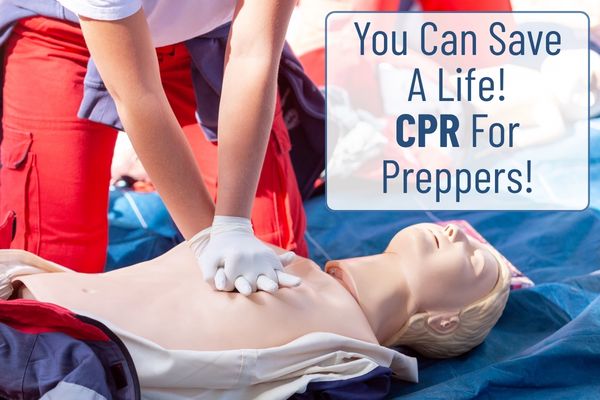
CPR training is vital to help prepare you for the reality of performing compressions on another human being. Training on a CPR mannequin helps you better understand what real CPR looks and feels. (Tip: It’s more physically demanding than it looks.)
Chest compressions are vital. You need to compress the chest at least 2 inches deep for adults, at a rate of 100-120 compressions per minute – roughly the tempo of “Stayin’ Alive” by the Bee Gees ( ironic, but effective). According to the Journal of the American Medical Association, depth and rate matter more than perfection[^4]. You’ll likely hear or feel ribs cracking. This is often unavoidable, since you’re compressing the heart between the sternum and spine.
Rescue breaths are secondary. Current guidelines from the American Heart Association support hands-only CPR for untrained bystanders or when rescue breaths aren’t possible[^1]. If you’re trained and willing, 30 compressions followed by 2 rescue breaths is the standard cycle. But if you’re alone, exhausted, or uncomfortable with mouth-to-mouth, continuous compressions are far better than nothing.
Fatigue is the hidden enemy. After just 1-2 minutes of effective compressions, your arms will burn and your rhythm may falter. Research shows CPR quality degrades significantly after two minutes without relief[^4]. If multiple people are available, switch every two minutes. In a solo scenario, you may need to continue for 20, 30, or even 60 minutes if help isn’t coming.
Environmental challenges amplify everything. Classroom CPR happens on flat floors under good lighting. Real-world prepper CPR might happen on gravel, in a storm, or by flashlight. The person might be on a bed (too soft – move them to the floor), in a vehicle (extremely awkward), or outdoors in mud or snow. You may be wearing gloves, dealing with blood or vomit, or fighting panic while family members watch.
In practice, CPR is messy, loud, emotionally devastating, and imperfect. It’s also the difference between a loved one surviving or not coming back. Accepting this reality before you need the skill is part of preparation.
Common Mistakes People Make
The biggest CPR mistakes may no be about technique, but about hesitation and stopping too soon.
Waiting too long is the most common fatal error. People second-guess themselves, look for other signs, or hope the person will “snap out of it.” The American Heart Association data shows that bystander CPR rates are only around 40% nationwide[^1], meaning 60% of cardiac arrest victims get no help while people stand frozen.
Fear of “doing it wrong” paralyzes good intentions. Yes, you might break ribs. But imperfect CPR beats no CPR every single time. Good Samaritan laws in all 50 states protect laypersons who provide emergency assistance in good faith.
Compressing too lightly or too slowly is where most people fail. You need to push hard and fast – harder than feels comfortable. If you’re not getting tired, you’re probably not compressing effectively.
Stopping too soon happens when people expect immediate results. CPR doesn’t usually “wake people up” like in movies. Most often, you’ll have to continue until professional help arrives, the person shows obvious signs of life (normal breathing, movement, pulse), or you’re physically unable to continue.
Focusing on breaths and neglecting compressions was the old mindset. Modern protocols prioritize compressions because blood circulation is what matters most in the first several minutes.
For preppers specifically, the mistake is assuming help will arrive soon. In disasters, EMS response times can stretch to hours or may not come at all. You need to be mentally prepared to continue CPR far longer than the few minutes before an ambulance typically arrives in urban areas.
What Happens If You Get This Wrong
The stakes of CPR are high. Brain cells begin dying within 4-6 minutes without oxygen. After 10 minutes without effective CPR, permanent brain damage is almost certain. After 15 minutes, survival with meaningful neurological recovery becomes extremely unlikely[^3].
If you perform CPR imperfectly – too shallow, too slow, with interruptions – the person’s chances of survival drop, but they still have a chance. If you do nothing, assuming someone else will help or that you might make things worse, the outcome is almost certainly death.
From a legal perspective, Good Samaritan laws exist specifically to protect people who act in emergencies. You cannot be successfully sued for providing CPR in good faith to someone in cardiac arrest. The legal risk of acting is virtually zero. The moral weight of not acting is permanent.
In prepper contexts, this calculation shifts further. During extended emergencies, you may represent the highest level of medical care available for miles or days. Your family, your mutual aid group, or your community may have no other options. The person whose life depends on your willingness to act might be your spouse, your child, or your neighbor.
Imperfect CPR beats no CPR.
Key Takeaways for Preppers
- Nothing beats professional CPR training to help you prepare for a medical emergency. CPR training will help you act quickly and strengthen your ability to act when every wasted second erodes survival odds.
- Training matters, but mental readiness matters more. Knowing you’ll act, that you’ll push through the exhaustion and emotion, separates those who save lives from those who wish they had.
- CPR belongs in the same preparedness tier as food storage, water purification, and first aid supplies. It’s not an optional skill for “medical people.” it’s vital knowledge for anyone serious about protecting their family and community when systems fail.
Frequently Asked Questions
Do I need certification to perform CPR?
No certification is legally required to perform CPR in an emergency. Good Samaritan laws protect anyone providing reasonable aid. However, proper training dramatically improves your effectiveness and confidence. The American Red Cross and American Heart Association offer courses ranging from online basics to in-person certification.
Is hands-only CPR as effective as CPR with rescue breaths?
For adults in sudden cardiac arrest, hands-only CPR is nearly as effective as traditional CPR for the first several minutes, according to American Heart Association studies[^1]. The priority is uninterrupted chest compressions. Rescue breaths become more important in drowning, drug overdose, or when CPR continues for extended periods.
Can CPR cause injury, and will I be liable?
CPR commonly causes broken ribs and bruising. This is an unfortunate, yet necessary, price to pay, since the alternative is death. All 50 states have Good Samaritan laws protecting people who provide emergency care in good faith. You cannot be held liable for injuries from reasonable CPR efforts.
Should I stop CPR if the person doesn’t respond after several minutes?
Continue CPR until one of three things happens: (1) the person shows obvious signs of life like normal breathing or movement, (2) professional medical help arrives and takes over, or (3) you are physically unable to continue. In prepper scenarios with no EMS response, you may need to continue for 20-30 minutes or longer.
How often should I refresh my CPR skills?
The American Heart Association recommends recertification every two years, but skills degrade much faster. Studies show significant decline within months[^2]. For preppers, annual hands-on practice is realistic and valuable. Even watching refresher videos and practicing compression technique can help maintain muscle memory.

This article is for general informational and educational purposes only and is not a substitute for professional medical advice or hands-on CPR instruction. Emergency medical situations vary widely, and proper response depends on training, circumstances, and local laws. Readers are strongly encouraged to seek certified CPR training and follow guidance from qualified medical professionals when responding to real-world emergencies.
1: American Heart Association. (2020). “CPR Facts and Stats.” https://cpr.heart.org/en/resources/cpr-facts-and-stats
2: American Red Cross. (2024). “CPR Steps and Guidelines.” https://www.redcross.org/take-a-class/cpr/performing-cpr/cpr-steps
3: Wilderness Medical Society. (2019). “Practice Guidelines for Prevention and Treatment of Hypothermia.” https://wms.org/
4: Journal of the American Medical Association. (2018). “Quality of Cardiopulmonary Resuscitation During Compression-Only CPR.” JAMA Network.