An Introduction To Prepper Fishing
Fishing has been part of my life for as long as I can remember. I must have only been 3 or 4 when my Dad put my first rod and reel in my hands. Back then it was just about catching snappers or fluke and staying out until dark.
As I got older though, I realized those long afternoons by the water taught me more than just how to bait a hook. They taught me patience, awareness and how to rely on my own two hands.
From a preparedness standpoint, fishing is more than a hobby. It’s a practical, renewable food-gathering skill that doesn’t rely on grocery stores, supply chains or fuel deliveries.
When most people think about sourcing food in an emergency, they jump straight to hunting. Hunting is valuable, no doubt.
Fishing offers something different, though. It’s quieter, can be done close to home, takes less energy than tracking game and in many regions, fish populations replenish faster than large land animals.
For preppers, that makes fishing an excellent supplemental or alternative food source.
Fishing also scales well. You can:
- Fish from shore without a boat
- Fish alone or with family members
- Fish in short windows of time
- Preserve your catch by freezing, smoking or drying
In a long-term disruption, having multiple food acquisition skills is vital. Stored food runs out. Hunting opportunities fluctuate. Gardening depends on seasons.
But water sources, when healthy, often continue producing.
In this guide, I’ll break down the foundation of rod and reel fishing from a prepper’s perspective for you. Why it matters, how it works, its advantages and limitations, common mistakes to avoid and more.
Why Rod and Reel Skills Matter
Rod and reel fishing is something just about anyone can learn. And once you get the hang of it, you’ll see it’s not just about catching fish. Although, that’s the fun part.
Stick with it long enough and you start building a quiet confidence.
You begin to read the water without even realizing it, watching how it moves, noticing where fish might hold and adjusting without overthinking it.
Here’s why that really matters:
1. You Get More Efficient Over Time
In the beginning, your casts might go sideways and your bait might not land where you want it to. That’s normal.
But with practice, you start placing your cast exactly where you mean to. You learn how deep your bait should be and how to work it properly.
That means less guesswork, less wasted time and better results. You’ll get there.
2. It’s Easy to Take With You
One of the best things about rod and reel fishing is how simple it is to pack up and go. A basic setup doesn’t take much room.
You can keep a rod in your truck, toss one in a backpack or store it in a closet without it taking over your space. It’s a skill you can carry with you.
3. You Can Use It Almost Anywhere
Ponds, creeks, lakes, rivers, oceans … you name it. Rod and reel setups work in all of them with the right adjustments.
You don’t need a boat or fancy gear to get started. As long as there are fish out there, you’ve got a shot.
4. It Builds Real-World Skills
Casting well, tying strong knots and handling fish the right way take focus and steady hands.
The more you do it, the sharper you get physically and mentally.
You’re also fully present the whole time, watching your line, feeling for movement and staying aware of your surroundings. Situational awareness is a vital prepper skill you can find out more about here.
What Is Rod and Reel Fishing?
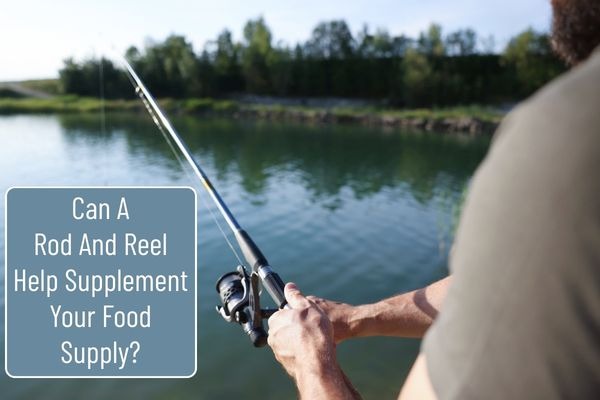
At its core, rod and reel fishing is rather simple. You’ve got a flexible rod with a reel that holds your fishing line. The line runs through the little guides along the rod and ends with a hook, lure or live bait.
There are several primary reel types:
- Spinning reels – User-friendly and popular among beginners. I still use them.
- Baitcasting reels – Offer greater control and accuracy with practice.
- Spincast reels – Simple and enclosed, often used by newcomers.
Common rod materials include fiberglass and graphite, each offering different levels of sensitivity and durability.
The basic process involves casting the baited line into the water, allowing it to reach a target depth and working it in a way that attracts fish.
When a fish bites, you set the hook and carefully reel it in.
And when you do bring in a nice haul, you can find some great outdoor cooking methods here when you’re ready to cook up your catch.
Essential Gear for Preparedness
Having a simple, well-kept tackle box beats owning a bunch of fancy gear you never use. Here’s what I generally keep on hand:
- A medium-action rod and spinning reel
- Monofilament or braided fishing line
- Assorted hooks and sinkers
- A small selection of lures
- Needle-nose pliers
- Line cutters
- A compact tackle box
- A first-aid kit
Keep an eye on your gear regularly. Check for frayed line, rusted hooks and cracks in rod guides. You’ll want to store your stuff so it stays dry, clean and protected from extreme temperatures so it lasts.
Pros and Cons of Rod and Reel Fishing for Preppers
Pros
- Accessible for most skill levels
- Portable and lightweight equipment
- Adaptable across freshwater and saltwater environments
- Encourages active engagement and situational awareness
- Pretty much affordable
Cons
- Requires practice and patience
- Dependent on local fish populations and regulations
- Weather-sensitive
- Not a guaranteed food source
- Gear can break without maintenance
I love fishing in the rain because the fish bite more (or so the old fishermen swear). And ice fishing is really cool. But I get why some may consider weather a drawback.
Safety and Ethical Considerations
My dad was my inspiration and taught me so much, but one of the most important things he instilled in me is that safety must remain a priority in all outdoor activities.
- Wear appropriate footwear near slippery banks.
- Be cautious with sharp hooks and casting in crowded areas. You don’t want to learn this the hard way.
- Monitor weather forecasts and avoid fishing during lightning storms.
- Follow local wildlife and conservation laws.
If you’re fishing in regulated areas, such as those managed by the National Park Service, check out the additional rules regarding permits, species restrictions and catch limits.
Also, ethical fishing supports long-term sustainability. Practice selective harvesting, avoid overfishing and dispose of fishing line responsibly to protect wildlife.
Common Mistakes Made by Beginners
OK, here’s what you don’t want to do:
1. Using the Wrong Line Weight
Too heavy a line can reduce casting distance; too light a line may snap under pressure.
2. Ignoring Local Conditions
Water temperature, clarity and time of day influence fish behavior. Fishing without considering these factors often leads to empty fish buckets.
3. Overcomplicating Gear
A lot of new anglers end up buying way more gear than they need. Honestly, keeping it simple with a versatile setup always works best for me.
4. Poor Knot Tying
Weak knots can result in lost fish and lost tackle. Practice tying strong, reliable knots before heading out.
5. Improper Fish Handling
Rough handling harms fish and reduces survival rates for catch-and-release. You want those little guys to grow up so you can catch them again when they are bigger.
6. Skipping Maintenance
Neglecting to rinse gear, especially after saltwater use, leads to corrosion and mechanical failure. Plus, your nose won’t be too happy with you next time.
Avoiding these mistakes builds confidence and increases your long-term success.
Tips to Get Better and Stay Ready
As all preppers know, improvement comes from practice.
- Fish regularly in different environments.
- Keep notes on weather, bait and results.
- Learn seasonal fish patterns in your region.
- Practice casting accuracy in open areas before fishing trips.
- Attend local workshops or community fishing events.
Many state wildlife agencies provide educational materials and guidelines. Learn them so you are compliant and informed.
Environmental Consciousness and Conservation
If our bodies of water aren’t taken care of, there won’t be many fish left to catch. Pollution, habitat destruction and invasive species threaten fish populations nationwide.
Support conservation by:
- Respecting catch limits
- Participating in cleanup efforts
- Reporting invasive species sightings
- Using biodegradable tackle when available
Good anglers know that taking care of the water and the fish today means there will be fish to catch tomorrow.
Key Takeaways
- Rod and reel fishing is a handy skill that can help put food on the table when you need it.
- Mastery requires practice, maintenance and mindfulness of local conditions.
- A simple, versatile setup is often best for beginners.
- Every time you head out, being careful and respecting nature should be your top priorities.
- Fishing should supplement a broader preparedness plan, not replace it.
- Keeping expectations realistic helps you enjoy fishing and stick with it for the long haul.
Frequently Asked Questions
1. Is fishing a reliable food source?
Fishing can supplement food supplies, but it is not guaranteed. Success depends on location, season, skill level and local regulations. It should be one part of a diversified preparedness strategy.
2. What type of reel is best for beginners?
My recommendation is that spinning reels are generally the easiest to learn. They are versatile and simple to maintain.
3. How often should I replace fishing line?
Line should be replaced if it shows signs of fraying, discoloration or weakness. Many anglers replace monofilament line at least once per season with regular use.
4. What’s the best way to remove a hook from a fish?
Use needle-nose pliers and handle the fish gently with wet hands. If the hook is deeply embedded, cutting the line may be safer than causing additional injury. Some folks like to wear gloves as well.
5. Can children learn rod and reel fishing?
Of course, I did! They just need supervision and age-appropriate equipment. Teaching safe practices, being patient and respecting nature should be emphasized from the start.
6. Is catch-and-release better than harvesting fish?
Both practices have a place when done responsibly. Catch-and-release helps preserve fish populations, while selective harvesting can provide food within legal limits. But hey, I’m in the camp that fish tastes good, as long as you stay within your limits.
7. How can I practice if I don’t live near water?
Casting practice can be done in open spaces such as parks or backyards using a practice weight instead of a hook. This builds accuracy and control.
Final Thoughts
Getting good with a rod and reel doesn’t happen overnight. It comes from showing up, casting again and learning a little more each time.
Along the way, you build real confidence and a sense of independence, all while spending time outside and doing it the right way.
Approach the water with care, and the lessons you learn will stay with you long after you leave the shoreline. Plus, you’ll have a lot of great meals and “fish stories” to tell along the way.
Bio: Anthony Vion is a lifelong fisherman from Long Island, NY. Growing up, he spent most of his free time on the water with his dad, whether fishing from their Thompson Sea Lancer in the Long Island Sound, surfcasting off local beaches, docks and jetties, or heading out to Montauk for bigger fish in the Atlantic.)
This article is provided for informational and educational purposes only. It does not constitute legal, safety or fishing advice. Fishing, including off-grid or self-reliance scenarios, involves inherent risks. Readers are encouraged to follow local regulations, practice carefully and seek instruction from qualified professionals. You are responsible for your own decisions and actions.