Introduction: Why Hand Lines Matter in a Grid-Down Scenario
Picture this: you’re on the water and hook something big. I mean BIG! As you start to reel it in, already seeing it in the pan tonight, your rod snaps. Insert your favorite expletive here.
Or the line in your reel turns into an epic bird nest that will take hours to sort out. Been there on both accounts.
Now imagine a scenario where you’re not just fishing for fun. Stores are closed. Supplies are running low. And putting food on the table is a main priority. That’s where a simple hand line starts to make a lot of sense.
A hand line is exactly what it sounds like. You have a length of fishing line, wrap it around a simple holder. There’s no rod or reel. No moving parts. No gears. No fragile components. Just line, hook, weight and your skill. It’s a true man vs. nature experience.
I have a similar “fish story”. I was 14 or 15 fishing off Crane’s Neck in the Long Island Sound. My dad dropped me off and would be back in a few hours to join me. Within the first half hour, the reel on my pole jams up good. The expletive I used. Think A Christmas Story in the tire changing scene.
Well, I was stuck. No rod, snappers jumping everywhere. Then a revelation. Cut out a decent amount of line, tie a bobber, lure and hook on it and wrap the end around my gloved hand. I was in business again. And brought home a bucket full of snappers that day.
For preppers and their families, the benefit is simple. Line fishing can give you a lot of food with very little gear. A small kit that weighs less than a pound can help you bring home several pounds of fish, aka usable protein.
What Is a Hand Line? (And Why It’s Different from Rod Fishing)
We touched on it already, but a basic hand line setup includes a main piece of line, hook, weight or sinker, leader line, improvised holder and an optional swivel. You could go with a hand reel, too. I Generally don’t.
When you’re using a rod and reed, the pole flexes and the reel smooths everything out. It creates a little distance between you and what’s happening below the surface. I covered mastering rod and reel fishing skills in another guide if you’re interested.
With a hand line, there’s no buffer. The line rests in your hands and you feel every run, every twist, every desperate pull. It’s simple, direct and a great way to help feed your family.
Why it works:
- There’s no mechanical failure
- It’s a silent operation, although at first you’ll probably miss the sound of the line spinning as you send that cast out
- Extremely portable
- Inexpensive and easy to assemble
- It’s a lot better in tight spaces, like docks
Possible drawbacks:
- Fighting large fish requires care
- Line burns are possible, that’s why I always use a heavy, protective glove
- Less casting distance, that’s for sure
- Requires attentiveness and hand strength
Choosing the Proper Hand Line Setup
For hand line fishing, you’ll want to go a little heavier than you would with a rod. There’s no drag system and no rod flex to absorb shock so your hands and the line take all the force.
And I’ve learned the hard way that the right line can mean the difference between landing dinner and watching it swim away.
1. Line Type and Strength
Two main options dominate:
- Monofilament – Your more affordable option with more give easier on hands
- Braided line – This one is stronger for sure, thinner and provides more feel
For weight, I recommend using this as a guide:
- 10-15 lb. for panfish such as Bluegill
- 20-30 lb. for bass and catfish
- 50+ lb. for saltwater or large species
Adding some local Long Island flavor, for inshore snapper and flounder, 20-40 lb. is the way to go. But when I’m going for a simple set up for both, my go-to is a 30-50 monofilament line. It’s a solid, forgiving choice.
In a prepper world, slightly overbuilding your setup makes sense. Line failure means lost food and lost gear. Going stronger builds in more margin for error.
2. Line Length
For most shore fishing situations, you’re good with say 50 to 100 feet of line. If you’re on a pier or boat, go a bit longer. More line gives you more flexibility but also opens you up to more dreaded tangles.
Avoid going the excessive length route though unless really needed. In my younger days, I made that mistake more than once fishing off the boat around Middle Ground in the Sound. I figured letting out more line would be better, but it generally ended with a tangle that cost me time and gear. So, I learned.
3. Line Holders and Spools
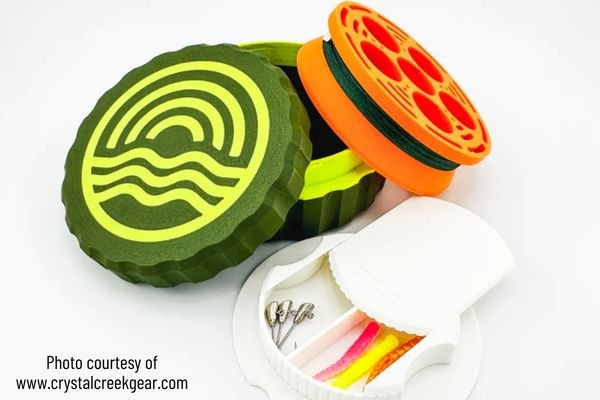
Your line holder doesn’t have to be expensive or pretty, that’s for sure. Almost any DIY holder will work. A PVC pipe, wood block, even a sturdy bottle will serve your purpose. I always have a backup with me as well.
If you decide to go with a hand reel, you can check out the Cuban Yo-Yo Reel, T-Handle Reel or Mechanical Hand Reel (with crank). Each keeps things simple, just with different levels of speed and control.
What Fish Should a Hand Line Fisherman Target?
Success is about being practical and methodical. Go after fish that give you steady, reliable calories for the effort you’re putting in.
Freshwater Targets
- Bluegill and other panfish – Abundant and relatively easy to catch
- Channel catfish – Bottom feeders attracted to simple bait
- Largemouth bass – Aggressive feeders
- Common carp – Large body mass, often overlooked
Saltwater Targets
- Atlantic mackerel – Schooling and aggressive
- Red snapper – Structure-oriented
- Flounder – Bottom dwellers and one of my personal favorites
- Bluefish – Aggressive feeders (use heavier leader)
- Porgy (Scup) – Scrappy and commonly found in schools
Techniques of Hand Line Fishing
1. Casting a Hand Line
There are several effective approaches and you may want to mix it up from time to time.
There’s the Underhand Swing, where you gently swing the bait and release toward the target area. This was how I learned first.
Also, the Coil-and-Throw. Just hold the extra line loosely in your non-dominant hand, then swing and toss the weight out. Drop Fishing, just dropping the line in and Current Drift, where you just let the moving water carry bait naturally downstream.
2. Setting the Hook
No luxury of a pole bend here. With a hand line, you feel subtle taps right through your fingers.
You don’t always get a dramatic jerk. For many species, a firm, steady pull sets the hook effectively. Timing matters more than power. Pull too early and you miss the fish; too late and it may swallow the hook deeply.
3. Fighting and Landing Fish
This is the fun part.
Let your line slip through your fingers if the fish surges. Avoid wrapping the line tightly around your hand. And retrieve the line hand-over-hand steadily
You’ll want to beach your fish when possible rather than lifting the heavy weight up or you could lose them at the last second. Also, cut the line if a fish becomes dangerously strong or entangled.
Protecting your hands is critical. Go with a heavy glove, your hands will thank you.
Essential Knots for Hand Line Fishing
Your knots need to be simple, strong, and easy to tie, even in the dark or with wet, cold hands. Here are a few to know:
- Improved Clinch Knot – Great for attaching hooks
- Palomar Knot – Strong and simple; excellent with braided line
- Snell Knot – Ideal for bait fishing
- Loop knots – Allow natural lure movement
- Blood knot – Joins two lines together
Bait Selection Based on Target Fish
Natural Baits
Worms, minnows, cut bait, like squid or mackerel, insects, bread (great for carp) and shrimp (saltwater) are favorites.
Worms and insects require no storage. Cut bait can be reused from previous catches.
Artificial Lures
I prefer natural bait myself, but spoons, jigs and soft plastic setups work pretty good, too.
Some lures are difficult to work properly without a rod tip. If packing artificial options, you may want to go with simple jig heads.
Safety Considerations
My dad was big on a safety-first approach for everything. As am I.
For line fishing, you never want to wrap line around fingers. Use the palm of your hand. Be cautious when handling large fish and always have basic first aid in your bug-out bag for hook punctures.
Also, avoid fishing alone when conditions are rough. Always wear flotation gear near deep or moving water and be sure to know and follow local fishing regulations.
Building a Compact Hand Line Fishing Kit for a Bug-Out Bag
Here’s my mantra:
Keep the total weight UNDER 1 lb., cost between $20-$40 and the size of a paperback book. Not Stephen King, The Stand. More along the 300-500 page type.
Here’s an inside look at my kit:
- 1 spool with 50–100 ft braided line (Monofilament if I’m going for snapper or flounder)
- Assorted hooks (sizes 6–2/0)
- Split shot sinkers
- 2-3 swivels
- Small jig heads
- Pre-tied leaders
- Compact multitool
- Small bait container
For preppers, knowing how to build the right bug-out bag is a vital skill.
Key Takeaways
- Hand lines are simple, portable fishing tools with no mechanical components.
- Slightly stronger line improves reliability … go heavier for less headaches.
- Target abundant species where you’ll catch and eat more.
- Practice casting and hook-setting before you need the skill.
- Safety, especially hand protection, is essential.
- A compact kit fits easily in a bug-out bag.
- I’ve seen guys with expensive setups get skunked and kids with a hand line fill a bucket. Skill wins.
Frequently Asked Questions
1. Are hand lines legal everywhere?
Pretty much. Some areas allow hand lines freely, while others limit the number of hooks or require specific licenses. Always check local regulations before line fishing.
2. Can beginners use a hand line effectively?
Yes, though it takes practice. Start with small, abundant species in calm water to build confidence and technique. I started with snapper off the dock.
3. Is braided line better than monofilament?
Depends on what you’re looking for. Braided line is stronger. Monofilament stretches more and is easier on the hands. I lean toward monofilament when saltwater fishing.
4. How do you prevent line burns?
Avoid wrapping line tightly around fingers. Wear gloves if possible and allow the line to slip during strong runs. Your hands will thank you.
5. What’s the best fish for reliable food return?
Panfish and catfish are often dependable due to their abundance and feeding habits. Smaller fish that run in bigger schools, like porgy and Bluegill, provide a good return as well.
6. Can children learn to use a hand line?
I think I was 7 the first time my dad took me line fishing. With supervision, children can learn safely. Two main things to reinforce are not to wrap the line too tightly around their hands and hooks hurt … don’t get them in your hand.
7. Should I rely only on a hand line for food?
The simple answer to any question like this for preppers is no. You never want a single method of anything to be your only plan. Hand lines will help put fish on your plate, but you’ll also want to have stored supplies and use other gathering methods for food security.
Final Thoughts
Hand-line fishing may not look impressive, but it’s one of the most practical and reliable ways to put food on the table, especially in a prepper or survival situation.
And if you’ve never practiced hand-line fishing, try it this weekend before you ever need it.
You don’t need a fancy rod or reel, just a strong line, simple knots and a little patience. Focus on fish that are abundant, travel in schools or feed aggressively and you’ll increase your chances of a steady catch.
Even a small panfish or a few flounder can make a difference when every meal counts.
Bio: Anthony Vion is a lifelong fisherman from Long Island, NY. Growing up, he spent most of his free time on the water with his dad, whether fishing from their Thompson Sea Lancer in the Long Island Sound, surfcasting off local beaches, docks and jetties, or heading out to Montauk for bigger fish in the Atlantic.)
This article is provided for informational and educational purposes only. It does not constitute legal, safety or fishing advice. Fishing, including off-grid or self-reliance scenarios, involves inherent risks. Readers are encouraged to follow local regulations, practice carefully and seek instruction from qualified professionals. You are responsible for your own decisions and actions.