Why De-Escalation Is a Survival Skill
I remember the gas shortage in the 70s. Taking a ride with my dad on even days (those were our assigned days) to the Hess station on the corner so he could fill his dented Ford pickup. The lines were down the block and we waited for hours.
One time, an older man with a 2-gallon gas can was asking the people on line if he could move ahead and just get a gallon of gas for his daughter who was stranded on 347 about 2 miles down.
My dad said OK, but the guy ahead of us was a different story. He didn’t just say no. He was screaming, waving his hands and using words my dad certainly didn’t approve of me hearing. Then I could hear other people yelling.
Getting out of the truck, my dad motioned for me to stay put. He walked over to the two men and started talking. He never told me exactly what he said, but the man stopped screaming, everyone around them seemed to calm down a bit and the older man started moving towards the gas pumps again.
Thinking back on that day, I realized my dad became the voice of reason and de-escalated a potentially very dangerous and violent situation. He had that effect on people.
Whether it’s supply shortages, power outages, natural disasters or other high-stress scenarios, a simple inconvenience can turn into something very ugly, very quickly.
That’s when the ability to prevent conflict before it escalates becomes an essential survival skill. Knowing how to calm people down, defuse arguments and reduce tension can protect you, your family and your community in ways that physical force never could.
Why Tensions Rise During Emergencies
Even calm and reasonable people can lose their heads under extreme stress. Understanding why this happens can help you better assess the situation and come up with the best plan for de-escalating it.
Fear of the unknown: What’s happening? What’s coming next? Our brains shift into survival mode when we don’t know what’s going on.
Limited resources: When food, water, fuel or medical supplies are running out, we may feel like we have to fight for what’s ours.
People running on two hours of sleep: Patience wears thin real fast and that could lead to us snapping much easier.
Someone starting a rumor that the gas station is closing: The rumor mills run at warp speed during chaotic times. But the “truth” isn’t always clear, leading us to take sides and dig our heels in. It’s another reminder to keep an open mind when things start getting heated.
Lack of authority: When it feels like there’s no one maintaining order, we may feel like it’s time to take things into our own hands. This may be the most dangerous situation.
Reading the situation will give you a leg up on how to potentially diffuse it before it leads to an angry mob scene.
Noticing The Early Warning Signs
Your goal is to stop a conflict before it turns into a full-blown crisis.
Most confrontations build gradually and if you know what to look for, you can spot the warning signs early.
Behavioral Signals
The first clues show up in communication. Raised voices or shouting, interrupting or talking over others, aggressive hand gestures, pacing and getting into someone else’s space.
See any of those and you know emotions are rising quickly.
Physical Signs
Adrenaline is running high when you see clenched fists, a red face, grinding teeth, rapid breathing and stiff posture. Notice these and it’s generally fight-or-flight time. More red flags for sure.
Situational Signals
Watch for crowds starting to form around an argument, disputes over limited resources, heated exchanges with alcohol or substances in the mix and when someone is publicly embarrassed or challenged.
Keep an eye on that last one, especially. When people feel like they’re “losing face” in front of others, they may double down on aggressive behavior to protect their pride.
Staying Calm Under Pressure
I went to college in Oswego, that’s upstate New York. One night after leaving the bar late, an angry drunk started approaching me, mouthing off. My first instinct was to start yelling back, but I saw he had a glass bottle in his hand.
He was getting closer and still talking loud, although I was only getting every third word or so. That’s when I decided to pivot.
I took a deep breath and calmly asked him if he saw my dog. He looked confused. I quickly described the dog and said she’s been missing for hours and how worried I was. He said something like, no but he’d keep an eye out. Loose translation.
I didn’t have a dog. But I didn’t have a problem either.
Staying in control of your emotions is key to resolving issues before they become bigger problems. Take deep breaths, think before you act and try to check your ego.
It may not always be easy, but preppers will always tell you the best way to win a fight is to not get into one.
Your Voice And Words Are De-Escalation Tools
What you say and how you say it can dramatically change the direction of a tense situation.
Lower Your Voice. It may not feel right at the time, but speaking in a quiet tone can speak volumes when someone else is yelling. Your calming voice stands out and could get the other person to pause. Like my dog story.
Also, I’ve seen over the years that most people take a cue from the tone you’re using in a potential crisis.
Use Simple Language. No one wants a lecture or to hear that you’re the smartest guy in the room. And long explanations can throw fuel on the fire for someone who is already frustrated.
Show You Understand. But make sure you do it with feeling. One of the fastest ways to reduce tension is to show that you get why someone is upset.
“I see why you’re frustrated.” “That sounds really stressful.” “Let’s figure this out.” Saying these things doesn’t mean you agree with everything being said. But it shows you care and that goes a long way.
Offer Options. Right or wrong, no one wants to be painted into a corner. When someone is distressed, give them choices. Don’t make it sound like you are telling them what to do.
That way, they feel they have some control over the situation.
Avoid Trigger Phrases
Telling someone who is on the verge of blowing a gasket to calm down is going to make things worse. Trust me, I learned that one early on. And if you want real fireworks to start fast, tell them they’re overreacting.
Body Language Sets The Tone
The way you position your body sends powerful messages. It could either calm people down or make them feel like you’re a threat.
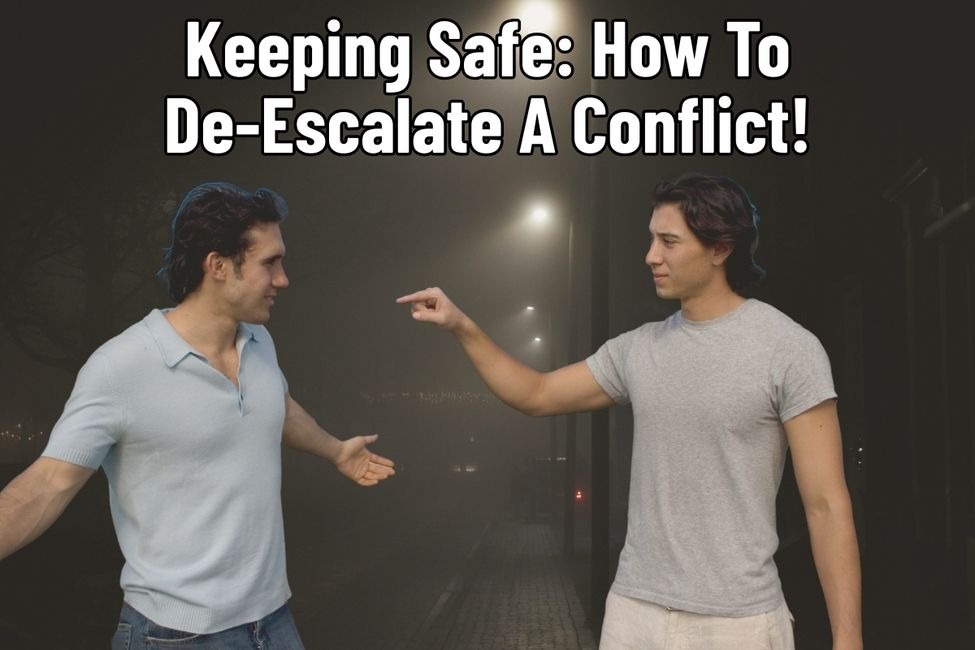
Take a non-threatening stance. Keep your hands visible, not hidden in pockets or behind your back. Don’t cross your arms. Keep your shoulders relaxed.
We all know that finger pointing is never helpful but multiply that by 10 in stressful situations. It’s also good to avoid long stares and sudden, dramatic movements.
And most of all, respect everyone’s personal space. When people are already panicked, standing too close can set them off.
Let your body do the talking to calm things down before you even say anything.
Prepper Conflict Management Strategies
Create Space. This is the one I probably use the most. The more distance between parties, the less tension. Even a few steps backward can help.
Be The Neutral Party. Even if you have a side, don’t take sides. You’ll be able to solve the problem faster and with less risk of it getting out of hand.
Redirect the Problem. Blame isn’t going to solve anything and odds are it’s going to get people hurt. Play both sides. My mantra is let’s figure out how everyone can get what they need.
Know When to Disengage. Not every conflict can be solved in the moment. If someone is intoxicated, extremely agitated or clearly looking for a fight, the safest move may simply be to leave.
Walking away is often the smartest and safest choice.
Final Thoughts
One of the most valuable survival skills is the ability to keep a situation from turning violent in the first place.
De-escalation protects you not only from physical harm, but also from the unpredictable consequences that come with unnecessary conflict.
Don’t raise your voice or your fists. Lower your voice, create some space and help everyone walk away safely.
(BIO: Anthony Vion is a lifelong prepper from Long Island, NY, with decades of hands-on experience in emergency planning. He focuses on practical, approachable strategies for managing water, power and essential supplies and helping households stay safe and resilient during everyday disruptions.)
(Disclaimer)
This article is intended for educational and informational purposes only. It does not constitute emergency preparedness advice. Emergency preparedness involves inherent risks. Readers are encouraged to seek instruction from qualified professionals and to take responsibility for their own decisions.