If you ever lived in a small space, you’re probably thinking I’m crazy right now. But I’m going to convince you otherwise.
For about a year and a half, I lived in a small one-bedroom apartment in Shirley, NY with my wife and son, and you would be blown away by the amount of stuff we had stored in there. Clothes, toys, decorations, food, paper goods, other supplies and so much more.
You just have to be smart about it. And the same goes when you’re preparing to store a long-term food supply to be ready if a natural disaster, supply chain break or other emergency situation hits.
Planning is everything. Try to wing it and you’re going to be tripping over a can of beans at 3am when you’re heading for the bathroom. Been there but it was Legos, not beans.
You want to use every inch of your apartment wisely and know what everyday areas can double as storage space. And you also need to have a solid grasp on what foods store well, how long they can last before going bad and how much food we’re actually talking about.
Start With a Realistic Food Plan
Before even getting started, guesstimate how much food you’ll be needing for either one person or the household.
Also, you don’t want just ramen noodles and cans of beans. Make a diverse list of foods that you know will last a long time, are shelf-stable and can be mixed and matched through regular meals.
I’d avoid the low-fat soups and canned vegetables that are half filled with water. You want items that pack a calorie punch and will keep you fuller for longer periods of time.
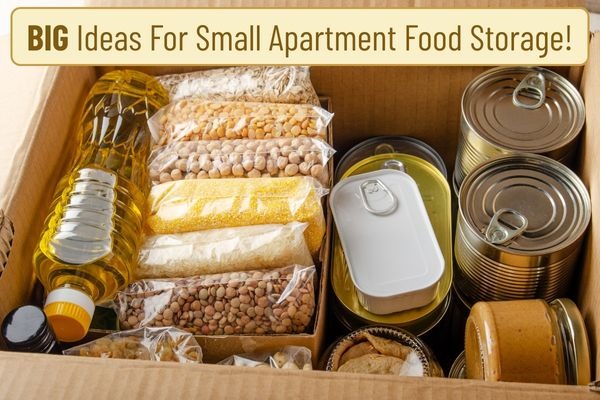
Rice, beans, lentils and pasta are classic choices. You can use these in a ton of recipes.
Then there’s your canned meats and fish. Along with the beans and lentils, here’s where you’re going to get your protein fix.
Oats and canned veggies and fruits work well. Freeze-dried foods are good, like meats, veggies, snacks, even dairy items. I’d round it out with shelf-stable milk alternatives, flour and baking goods and cooking oils.
Compact, affordable, and easy to store, that’s what you’re looking for. Stackable containers are a must as well.
Think Long Shelf Lives
Some foods will last for years when stored properly, while others not so much.
Keep your dry foods in cool spaces and they will serve you well for a long time. Canned goods require little preparation. Freeze-dried foods, although a bit pricier, take up very little space and are calorie champs.
You want airtight containers, sealed bags and original packaging designed to last and help protect food from moisture, pests and air exposure.
Vertical Space Wins Out
Small apartments don’t have large storage rooms, otherwise they wouldn’t be small apartments.
But they do have vertical space. Walls, closet shelves and cabinet tops often go unused in everyday life.
Think about it. Tall shelving units can dramatically increase your storage capacity without taking up much floor space. That’s huge.
A narrow shelving rack placed in a closet, hallway corner or even behind a door can hold dozens of canned goods or dry food containers.
Stackable storage bins also help you take your vertical space to the max. Go for clear bins, though. You’ll thank me later when you don’t have to open every container to find that one thing you’re looking for.
Another area most people never use is the space above kitchen cabinets. If the cabinets don’t reach the ceiling, you can pack the heck out of that upper area with lightweight storage containers. Just leave yourself a map of sorts about what you’re putting up there.
Oh, Those Hidden Storage Areas
Here’s a little secret. There are many everyday items scattered around your apartment that have untapped space for holding food supplies.
Beds are a great example. Under-bed storage containers can hold large amounts of dry food while remaining out of sight. Flat storage bins designed specifically for this purpose slide easily beneath most bed frames.
Sofas and chairs with storage compartments give you more options. Even regular furniture can hide food containers if there’s enough clearance underneath. Again, just leave yourself a note of what you’re putting under there.
Closets are also homerun storage zones. A small section of a hallway or bedroom closet can hold shelves of long-term food while still leaving plenty of room for clothing.
Kitchen cabinets, laundry areas and entryway closets also probably have unused space that you can repurpose for food storage.
Rotate, Rotate, Rotate
In your long-term food storage plan, you can’t just store stuff away and forget about it. Rotating your food regularly will keep your supply fresh and reduce waste. Believe me, you won’t get an unpleasant-smelling surprise opening up that can of hash nine months in.
I’m a fan of the “first in, first out” system. Newly purchased food goes to the back of the shelf while older items move forward and get used first. Easy-peasy.
Rotating also helps you realize what foods your household actually likes eating, which makes long-term storage a better experience.
Use Compact Containers
Bulk foods often come in large bags that are difficult to store neatly. Transfer these into smaller containers that can be stacked neatly to better optimize your space.
This one makes a lot of sense. Square or rectangular containers tend to fit better on shelves compared to round ones because they leave less unused space between them.
Airtight containers also help protect dry foods from humidity and pests. Clear containers allow quick visual checks of supply levels. Win, win.
I’m a stickler for labeling containers with what’s in them and when I bought them. I became that way because I got tired of opening every container to find what I was looking for. Learn from my mistake here and you’ll be a lot happier.
Multi-Purpose Spaces Are Heroes
In small apartments, living space doubles as storage space and vice versa. I just like saying vice versa, sometimes.
For example, decorative storage benches are seating and food storage. Storage ottomans let you kick your feet up on a month’s worth of food supply without anyone being the wiser.
Bookshelves can also hold pretty storage baskets filled with packaged food items. When done neatly, these shelves look like normal décor.
Even kitchen islands or rolling carts can provide extra space for canned goods and dry foods.
Keep An Eye On Storage Conditions
Heat, humidity and sunlight are not your friends here.
You want to find cool, dry places to store your food so it lasts longer. Not by windows or heat sources.
Airtight containers will help you combat humidity issues in the kitchen or bathroom. Also, to reduce the risk of ants, mice, etc., keep food that’s not in bins off the floor.
Stay Organized
When you’re just dealing with a few shelves, knowing where to find the mac & cheese and sardines is easy. But when you’re in the year-long food storage game, you need to really stay on top of things.
I mentioned before that I use a map. Just various pages that detail what’s where. You can use whatever system you want, but you’ll really want to have some kind of written list or diagram to help you remember without having to go on a scavenger hunt.
Even a basic checklist taped inside a pantry door can help track inventory levels.
Knowing exactly what you have makes meal planning easier, too and ensures the stored food gets used before expiration dates.
Avoid Overcrowding the Apartment
Costco is great but I don’t want to live there. Remember, this is your home and you want it to feel that way. You don’t want guests falling over stacks of pasta boxes when they visit, either.
Build Storage Over Time
Diving in headfirst with a year’s worth of food only to have it sit for weeks or months on the floor and in the way is not the way you want to go.
Start slow. Add a few extra items during regular grocery trips. You’ll get there before you know it. And this way it won’t be a big upfront financial hit.
(BIO: Anthony Vion is a lifelong prepper from Long Island, NY, with decades of hands-on experience in emergency planning. He focuses on practical, approachable strategies for managing food supplies, power, water and other essentials and helping households stay safe and resilient during everyday disruptions.)
(Disclaimer)
This article is intended for educational and informational purposes only. It does not constitute emergency preparedness advice. Emergency preparedness involves inherent risks. Readers are encouraged to seek instruction from qualified professionals and to take responsibility for their own decisions.