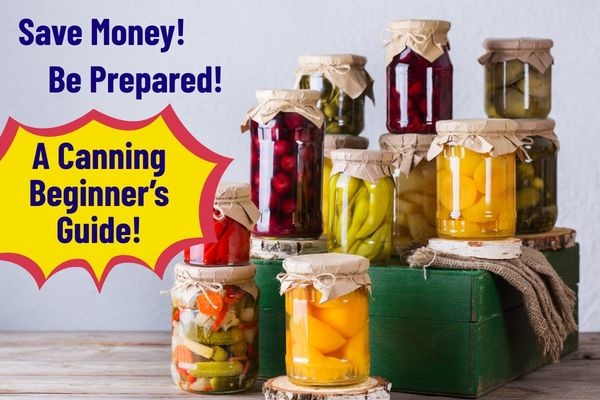
My father-in-law is a mountain man from West Virginia. The first time my now wife brought me over to the house, what caught my eye immediately was all the glass jars on the kitchen table.
There must have been a hundred of them. It was mid-October and he was breaking down his garden. He had bins and bins of vegetables in the Florida room. Tomatoes, cucumbers, peppers, about 15 different kinds of hot peppers, eggplant, onions, you name it.
I turned to my now wife and was just like, wow. I mean, my dad and nana canned some stuff, mostly fruit preserves, and taught me how to do it. But this was next level for sure. And I quickly became a convert.
Long before refrigeration, people have been canning food to help get through the colder months. And they didn’t need any fancy, specialized gadgets to do it.
With a few simple supplies and a basic understanding of how to preserve food safely, anyone can get into canning without investing a lot of money. Let’s get to it.
Is Canning an Essential Prepper Skill? You Bet
Preserving your own food at home gives you some real advantages.
The most important one to me, because I absolutely can’t stand to waste anything, is that it extends the life of the produce from your garden.
If your harvest is anything like mine, you have more vegetables and fruit than you can even give away, no less eat.
Before I started working remotely, I would bring beefstakes, cherry tomatoes, hot peppers, eggplant, zucchini and more into the office every day for weeks for my friends at work to enjoy.
Once that stopped and the produce didn’t, canning became an even more important part of my skill set. Preserving what’s left helps my family and friends enjoy it for months. Just make sure you get your jars back when you give them away.
Another advantage is it gives you some more freedom from supply chains. Sure, grocery stores are convenient, but shortages and unexpected disruptions happen. Plus, with your own canned supply, you’ll save some money, too.
Advantage three, no refrigeration needed. Your canned food is shelf stable and ready for long-term storage in your pantry.
The Basics
Canning preserves food by heating it in sealed containers. My dad and nana taught me, and my father-in-law reinforced it, that there are two key things that are essential for safe canning.
The first is heat processing to temperatures high enough to kill anything that can cause your food to spoil. Mold, bacteria and other stuff you don’t want to be eating.
The second is sealed storage. The sealed container stops anything new from getting in and making it go bad.
When both things are done right, you’ve got food that will last you months. Also, find out why it’s important to rotate your supply.
Your Simple Canning Tools
The latest technology can be helpful, sure. But you don’t need all the bells and whistles.
Here’s what you do need:
Glass Jars – this is your standard container for home canning. Durable, reusable and stands up to the heating process.
Two-Piece Lids – a flat metal lid combined with a threaded band. During processing, the lid forms a vacuum seal as the jar cools. Then the metal band simply holds the lid in place during processing and storage.
Large Cooking Pot – just your everyday large stockpot to process jars. The pot needed to be deep enough to hold jars upright while allowing water to circulate around them.
It’s the same basic set up as modern water-bath canners. So why spend the extra money?
Jar Lifters or Tongs – now I don’t have to tell you not to pick up those hot jars with your hands. Sturdy tongs, thick cloths or simple jar lifters will do to move those containers in and out of boiling water.
Kitchen Towels and Racks – place a cloth towel or simple rack at the bottom of the pot so the jars aren’t sitting right on the metal surface. This will help prevent the glass from breaking when heating.
And then you just need plain boiling water. Easy peasy.
Yes To High-Acid Foods. Low-Acid Foods, Not Yet
Different foods require different techniques to preserve them because, well they act differently, when you process and store them.
For high-acid foods, you just need boiling water, making it perfect for beginners. These are your fruits, jams and jellies, pickled vegetables and tomatoes that tend to slow bacteria growth naturally.
NOT FOR BEGINNERS
Then there are your low-acid foods, where unfortunately you do need specialized equipment called a pressure canner.
For most vegetables, meats and soups, you need higher temperatures during processing here than boiling water reaches to prevent harmful bacteria.
For anyone just starting out, high-acid foods are usually the safest and most practical place to begin.
Great Foods To Start With
These favorites store well and keep their flavor well after you preserve them.
Pickled cucumbers are my favorites. Then you have your fruit jams and preserves, applesauce, pickled beans or carrots, tomato sauces and fruit syrups.
Common Beginner Mistakes
I know you’re excited to get started canning, but it’s great to be able to learn from the mistakes of others so you don’t have to make them yourself.
Using damaged jars or lids is a recipe for disaster. If you notice something isn’t right, toss it and grab another one.
Also, I know you want to get as much of that good stuff into the jar as possible, but do not overfill it. Leave some space at top so you don’t get any weird stuff going on during processing.
When you’re done, make sure your sealed jars are stored in a cool, dark place. Heat and sunlight are not your friends here as they will cause your food to go bad quicker.
Last one, you may love pickled cucumbers as much as I do, but if you can 50 jars of them, they’re going to go bad before you get to all of them. Moderation, my friends.
It’s all about building a well-balanced food stockpile.
Building Your Pantry Over Time
You are not going to become my mountain man father-in-law overnight. And I’m telling you, you don’t want to.
Start with a few batches of preserved fruit or pickles and get comfortable with the process. Then after a while, make your move into other foods.
For many households living the prepper lifestyle, canning is seasonal. During harvest season or at the end. But it doesn’t have to be.
If you enjoy doing it, you can do it year-round. Just find some great produce deals at the market and get to work.
And before you know it, you’ll have a stocked pantry filled with the foods you love.
Anthony Vion is a lifelong prepper from Long Island, NY, with decades of hands-on experience in emergency planning. He focuses on practical, approachable strategies for managing food supplies, power, water and other essentials and helping households stay safe and resilient during everyday disruptions.
This article is intended for educational and informational purposes only, not canning advice. Home food preservation involves inherent risks. Readers are encouraged to seek instruction from qualified professionals and to take responsibility for their own decisions.