When I was a kid, my dad would take me out to Montauk on the weekends to do some fluke fishing. Before we got on the Lazy Bones or whatever other boat we were going on, we would take a walk around the dock.
I was always amazed when the commercial fishing boats came in and we saw their hauls. I couldn’t believe how many fish they caught.
One time I think I said something like, “it would probably take me two years to catch all those fish.” And my dad smiled and said, “not if you were fishing with a net.”
During emergency situations when you have a lot of mouths to feed, a rod and reel most likely isn’t going to cut it. You need something that’s going to bring in more food at a faster clip.
That’s where net fishing comes in. People have been using nets to catch fish for ages. They’re reliable, they bring in way more than you’d expect and if the day ever comes when you need to feed more than just yourself, you’ll be glad you know how to use them.
Nets For The Long Game
If you’re just dealing with a crisis in the short-term, rod and reel fishing should be fine. Even hand line fishing could work out.
But when the days start adding up and you need to feed a group of scared, hungry people, you’re going to want the efficiency that net fishing brings.
Depending on the kind of net you use, net fishing can even work for you in the background. Set it up and check on it, but it frees you up to do other things like managing your water supply or building a shelter.
But the best part is that one haul could feed the group for a day or two.
Different Types of Nets
You want different nets for different situations, environments and your level of experience.
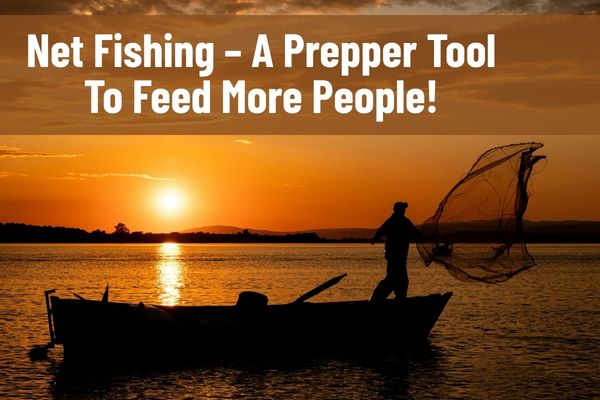
Cast Nets – these are circular nets thrown by hand that spread out over the water and sink quickly. Usually, you see them in shallow areas where fish are visible or in big schools.
Calm waters like ponds, bays or slow-moving rivers are perfect for cast nets and you can use them by yourself for going after groups of smaller fish.
It takes a little practice, but once you get used to it, cast nets can get you quick results in the right conditions.
Gill Nets – these are designed to catch fish by allowing them to swim partially through the mesh, where they become tangled up.
You can set it in place and then leave it for a period of time, but you don’t want to wait too long between checks. I hate seeing guys leave their nets for hours on end and then just throw away some dead fish they weren’t looking to catch. That’s not right.
Gill nets can also cover wider areas than handheld nets, increasing your odds at a bigger haul.
Seine Nets – my uncle Charlie used to like these. They’re long nets used by two or more people who pull them through the water, surrounding fish and guiding them toward shore.
It works best in a community setting, too, where you can get some help. Seine nets are perfect for shallow shorelines or flat-bottom areas and can bring in a lot of fish in a single pass.
Dip Nets – I’m not a big fan but these are great for kids and beginners. They’re just small, handheld nets you dip in the water and try to scoop up fish.
You see a lot of these on docks and riverbanks, but definitely not your best choice when you’re looking to feed a community.
Targeting The Right Fish.
Smaller schooling fish are the first ones that come to mind. They’re easier to catch in large numbers and seen a lot near shorelines and shallow waters.
You’re probably looking at minnows, sardines or small panfish depending on where you live.
Bottom-feeding fish are also good targets since they stay close to the water floor and move slowly. You want a Gill net for these in rivers or lakes.
Catfish, carp, suckers and freshwater drum are good options. You can go for eel as well, if you have a taste for it.
Seasonal Considerations
Just like people, fish change up their routines at different times of the year.
Warmer months often increase activity near the surface, while cooler seasons may push fish into deeper or slower-moving areas. Also, spawning periods can temporarily concentrate fish in specific locations if you know where to look.
Where Nets Are Most Effective
Like real estate, it’s location, location, location.
Shallow Shorelines are great spots. The nets are easier to manage, it’s safer for groups and they attract smaller fish and schools. These spots are the best places to start for beginners.
Slow-moving rivers and streams generally provide a steady flow of fish. You can strategically place stationary nets here, just keep an eye on the current. If it’s too strong, you could damage your equipment or worse.
Lakes and ponds are controlled environments great for cast nets and seine nets. I head straight for the vegetation since the fish seem to like to hang out in it. Shaded areas, too.
Then there are coastal areas and estuaries which tend to have a lot of different kinds of fish. Just keep an eye on the tides.
Techniques To Improve Results
Timing – I have the best luck early mornings and my cousin Danny swears by late evenings. He always catches fish, so who am I to disagree with him. Periods of low light are strong as well.
Scout The Area First – Before putting your net in the water, watch for any fish movement, ripples or disturbances. Also, if you see any vegetation or other areas fish may like to hang out.
Mix It Up – You may think it’s your lucky spot, but fishing in the same area over and over will start bringing in less and less fish. Change spots, allow the area to recover and repopulate, then head back there.
The Bigger Picture
You can definitely bring in huge hauls when net fishing, but you’re going to want to have other food sources as well in long-term emergency situations.
Gardening, foraging and stored food supplies will be a big help. Hunting and trapping, too.
Final Net Thoughts
Net fishing was made for feeding large groups of people.
In a crisis that lasts longer periods of time, keeping everyone in your community safe and fed is priority one. And net fishing can play a big part in helping accomplish that.
It just takes a little practice and know-how.
And when you do bring back that first big catch to the group, say what I say.
“I caught ‘em, you clean ‘em.”
Bio: Anthony Vion is a lifelong fisherman from Long Island, NY. Growing up, he spent most of his free time on the water with his dad, whether fishing from their Thompson Sea Lancer in the Long Island Sound, surfcasting off local beaches, docks and jetties, or heading out to Montauk for bigger fish in the Atlantic.)
This article is for informational and educational purposes only. Fishing regulations vary by location and some net types or methods may be restricted or require permits. Readers are encouraged to follow local regulations, practice carefully and seek instruction from qualified professionals. You are responsible for your own decisions and actions.