My dad had a vegetable garden for as long as I remember. When I was small, we were old school and would turn the soil over with shovels. As I got older, the torch started to pass and the garden became mine, with my dad watching me while sitting in a chair and drinking a beer.
There’s nothing like those memories, but what I love almost as much is how much better homegrown vegetables taste than the ones you buy in the store. The tomatoes, absolutely supreme.
When I worked at Publishers Clearing House, during the summer months the table next to my desk was filled with cherry tomatoes, beefsteaks, cucumbers, hot peppers, zucchini, eggplant and so much more that I’d bring in to share with my work friends.
To this day, even if it’s been years since we’ve spoken, a lot of them still bring that up and it makes me feel good. I miss those days.
My garden is a decent size, but it’s not a farm. Still, I’m not happy unless I’m maxing it out.
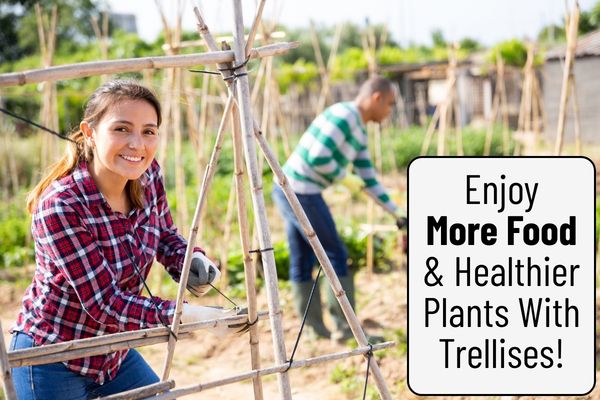
Especially for crawling vine plants like cucumbers, zucchini, yellow squash and all kinds of beans, trellises are gold. The plants grow up and you save soooo much space.
Even with just a couple raised beds or some containers, the difference in how much you harvest and how healthy everything looks is pretty wild.
You can find some trellises that don’t cost a lot or you can even make them yourself, like I do.
The Magic Of Trellises
Saving space is the obvious benefit, but honestly, that’s not even the best part.
The one I appreciate most is no more digging through all the intertwined plants to find those cucumbers and zucchini. Since the fruit is growing up on the trellis, you can see them so much easier. Sure, you still may have to brush a leaf or two away, but it’s nothing like searching through that jungle on the ground.
Rotten produce will become less of a problem, too. I hate finding a zucchini or tomato sitting in the mud after a long rainfall all rotten or getting gnawed at by pesky bugs. And the animals don’t bother them as much.
They get more airflow too, which helps the leaves dry out faster and keeps a lot of those annoying diseases away. You still have to watch out for root rot though, although that’s more of a bug-related issue.
With everything at eye level, you’ll like how much easier the weeding and pruning is. I know I do. No more accidentally pulling out a plant root that was mixed in with all those weeds.
Best Trellis Vegetable Plants
The climbing and crawly vine crops are the perfect targets. Cucumbers, squash, peas, pole beans, tomatoes, cherry tomatoes and even pumpkins and melons, if you support the fruit well.
With the cherry tomatoes, you’ll have to keep securing them with ties as they grow or they’ll just flop all over the place.
And a neat trick I learned years back with the beans, you don’t really need an actual trellis. Just get some heavy string and some stakes and wrap the string around and the plants will climb right up.
Why Trellises Work Well
Simple. Plants grow straight up so you can plant them closer together. Love that.
And now they get more sun. The leaves spread out and all those extra sun rays work magic.
If you’re a vegetable gardener, you know the heartache of putting all that time in only to see fungus start spreading across your plants. But with a trellis, your plants aren’t sitting on damp soil anymore and with them higher in the air, it lowers that risk.
One year my cucumbers were a disaster. I must have lost over thirty of them to rot because we had so much rain. Such a waste.
I’ve noticed healthier plants just keep producing longer, plain and simple. Even a few extra weeks can put a lot more food on the table.
Different Types of Trellises (and When to Use Them)
I’m a simple guy, so I generally try to take the easiest, most cost-effective route with everything. And trellises are no different.
Let’s talk about my favorite, the A-Frame Trellis. Lean two panels together like a tent. Can’t get much easier than that. This one is perfect for beans, cucumbers and peas because you have easy access to both sides.
I like the Vertical Panel or Fence way as well. Put any structure along the edges of a bed or against a wall. I like to use the fence I have around my garden for cucumbers and cherry tomatoes, but it’s also great for other climbing crops.
String Trellises that I mentioned before are great for beans, peas and tomatoes. It’s a little bit of work though and make sure you have enough support in the center. I blew it my first time.
Or if you want to get fancy, an Arch or Tunnel Trellis has more eye-appeal. It’s a curved structure that creates a walkway of sorts to make the most of the vertical space. It creates some nice shade underneath as well. I’ve had good luck using it for squash and beans.
Now Train Those Plants To Climb
Some plants are natural born climbers, like peas and beans that use their tendrils (funny word) to grab onto things. Any netting, wire or string will work and these guys climb right up. You can guide those young vines to the trellis though if you want.
Twining plants are kind of similar. They wrap around any supports as they grow. Plants like cucumbers and zucchini fit the bill. Just wrap the plant around the support early and watch them head right up.
Some plants are pretty stubborn though. The “non-climbers,” I call them. But they will climb if you train them. Especially those tomatoes.
I use ties to secure them to the trellis as they grow, maybe every 6-12 inches. Don’t tie them too tight though because the stems need room to grow.
You Have To Support Those Heavier Crops
A pumpkin or watermelon will take down your trellis in a heartbeat if you’re not supporting that fruit. Slings are good. You can use old T-shirts, cloth strips or mesh bags to cradle larger fruit.
Check the supports every few days and I always add a few extra stakes at the bottom of the trellis to anchor it down. I learned the hard way once when a trellis filled with zucchini fell over and crushed my eggplant plants.
Placement and Setup Tips
A bit of common sense, but you want to make sure your trellis isn’t blocking the sun from getting to your other plants. Your peppers and eggplant won’t thank you if they’re in the shade all day.
Also, taller trellises catch more wind, so you’ll want to anchor them down good.
Make sure you can easily reach both sides, too. And don’t wait too long to get those plants supported.
Final Thoughts On Trellises
I’m getting a lot more food without having to rototill more ground thanks to trellises. And my body, as I’m getting older, is happy about that.
That’s what having a trellis or a bunch will give you. I generally put in seven or eight, not counting the outside garden fencing. It doesn’t cost much, and once you see it work, you’ll wonder why you didn’t do it sooner.
I wouldn’t advise going gung-ho to start. Maybe try one or two this season so you get a feel for it. I recommend cucumbers or tomatoes first. But I can almost guarantee, you’ll be using more next year.
And the side effects are awesome, too. Less rotting fruit, easier weeding and overall healthier plants.
Have fun and happy gardening.
BIO: Anthony Vion is a lifelong prepper from Long Island, NY, with decades of hands-on experience in emergency planning. He focuses on practical, approachable strategies for managing food supplies, power, water and other essentials and helping households stay safe and resilient during everyday disruptions.
This article is intended for educational and informational purposes only. Readers are encouraged to seek instruction from qualified professionals and to take responsibility for their own decisions.