I’ve lived through more than my share of disasters. Maybe you have, too. But even if you’ve just seen it on the news, you know that they can hit fast. Real fast. And the question is, when they do, just how long do you need to be ready afterwards.
Most of my friends and family are split between the two main schools.
Jason and Stork are very much in the “we’ve got three days, we’re fine” category. I went to school up near Oswego, NY with them and I still remember this one storm where we got absolutely buried, like 30-plus inches in a weekend. I think a few of my fingers are still numb.
Nobody was panicking, but the grocery store parking lot looked like people were stocking up for hibernation. Jason and Stork weren’t really those people though. They had what they needed and just stayed put. I do remember them making sure the beer fridge was full though.
Then there’s my father-in-law, Poppy. He’s the opposite. West Virginia guy, old-school and his basement is stocked with canned everything you can think of. And so much clean drinking water. Funny, he doesn’t talk about plans much, but he’s definitely ready for anything 30 days out and longer.
Me,I lean towards the 30-day plan because I’d rather have that extra clean water and not need it, than need that water and not have it. But that’s just me.
The most important thing though is that you have a plan.
Planning For 72 Hours
I’d say three days is the standard starting point. And in many cases, that’s probably enough. Think short power outages, quick storms, things that get messy but have you up and running fast.
But if you’ve lived through bigger events, you know it doesn’t always work out that way.
I still remember when Hurricane Gloria hit back in September of ‘85 and SuperStorm Sandy in October of 2012. Brutal, just brutal. On Long Island, we had no power for way longer than anyone expected. For both storms, we were out for over two weeks and people were seriously freaking out.
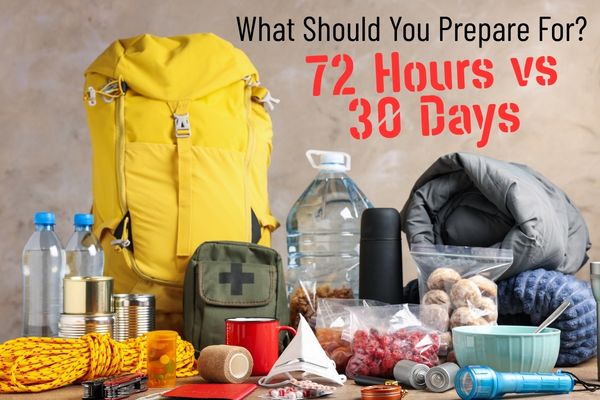
For a basic 72-hour setup, let’s start with water. You should be fine with a gallon per person per day or so. Then some cans of food and other things that won’t go bad quickly. Nothing from the fridge.
Flashlights, batteries and a radio if you can get one. Plus, don’t forget a first aid kit and whatever meds or hygiene items you normally need. Not having toilet paper is one thing though. Your heart medication is a different ballgame.
Honestly, it’s a lot easier to do than you think. You could probably throw something together in an afternoon.
Three days may sound like a long time, but when things start going south like roads closing and store shelves emptying, that’s where you’ll start wishing you had prepared a little bit more.
Going Beyond That: The 30-Day Plan
You don’t need to build a bunker or disappear off-grid. You just want to have enough to ride out a longer disruption if you need to.
More food, more water, more backup power if you can manage it. And don’t forget that fuel for the generator.
I remember during Gloria, my dad had one of the bays in the garage lined with water jugs and the shelves were filled with canned peaches, cucumbers and tomatoes. He loved canning all the stuff we got from the garden.
The floor in that bay was always filled with sawdust and to this day, that smell still brings me back.
Medication is another big one people overlook. Insurance usually limits refills, so it can be tough to build a buffer. But if you can gradually get ahead even a little, it makes a difference. My neighbor, Phil, uses a mail order pharmacy and he gets three-month refills.
And then there’s the everyday stuff you don’t think much about like soap, toilet paper. They’re “nice to haves” until you don’t have them for a week or so.
It takes more preparation and will definitely take up more storage space, but there may come a point when you smile and think good things about me because you read this.
But Don’t Go Overboard
We all know that guy that does everything at 150 miles per hour and runs headfirst into a brick wall at full speed. You definitely don’t want to be that guy in these situations.
Add a few items to your grocery list every week to start. Fill up a few jugs of water and place them in an out of the way area. Buy too much all at once and you’re going to be tripping over a can of hash at 3am as you groggily make your way to the bathroom.
What’s Your Personal Risk Factor
If you live in an area where hurricanes and severe storms aren’t strangers, you’re probably going with Poppy and the 30-day plan. Also, if you have little kids or are taking care of some older family members, it’s probably a good idea to be overprepared. Same goes for if anyone has any medical issues.
There’s no perfect number that works for everyone.
Build It In Layers
If you’re going the longer road route, you can break it down into smaller bites. It will definitely be easier that way.
Start with the basics. What do you need for two or three days. Focus on stuff you can grab quickly, like go-bags and essential stuff.
Then build up to a week by adding more food and water. Some fuel is probably a good idea, too.
After that, you can start thinking longer term. Two weeks, maybe a month. Maybe more.
A Few Misconceptions
Being prepared doesn’t mean you are paranoid. Far from it.
Also, it doesn’t take a huge investment, especially when you do it over time. No need to buy every can of beans from the grocery store. Get a few extra things on your weekly shopping trip.
I once heard someone, at an engagement party of all places, say that you need a full survival setup in the woods to be fully prepared for a real emergency. For some that could be a perfect plan providing peace of mind. But it was more than I could handle. I definitely didn’t want to get into it then (you’re welcome Ann and Steve), so I just walked away. Right now I believe different people need different solutions.
Also, you probably heard this one before. You need a $2,000 generator and all the top-notch survival gear. Nope. My generator ran me a little over $400 slightly used and it’s still running more than 10 years later.
You won’t find any fancy gear in my garage or shed as well, but everything I have works and does the job I need.
Final Thoughts On Timing
Whether you’re with Jason and Stork in the 72-hour camp or with me and Poppy in the 30-day school, you have to make that decision.
A 72-hour plan is a good place to start.
But think bigger because Mother Nature definitely does at times. And you never do really know what’s coming.
Keep putting your extended plan into place piece by piece until you hit that 30-day mark. Find a place to store that clean drinking water. Even if you have a small apartment, there are creative ways to find space to store your stockpile of food.
Also, have a decent supply of fuel on hand, but make sure you replace it after using it.
That way, when something long-term does hit, you’ll be ready.
AJ Vion is a lifelong prepper from Long Island, NY, with decades of hands-on experience in outdoor living, self-reliance, and practical skill-building. He focuses on breaking down complex ideas into clear, usable advice that readers can actually apply. When he’s not writing, he’s in the field-testing gear, refining techniques, and continuing to develop the kind of skills that matter when it counts.
This content is for informational purposes only. It is not a substitute for professional training or official guidance. You are responsible for your own decisions. The author and publisher assume no liability for any actions taken based on this information.