I work from home now, but at least once a week when I was commuting into the office, I would dream about just walking away from it all. Packing up the family and going off-grid.
It was three hours round trip. I’m surprised I never actually did it.
Aside from all the time I’d be saving, I wouldn’t have to hear Janet say, “Happy Monday,” every single Monday to everyone she saw. And more importantly, I wouldn’t be spending what seemed like every waking hour working, or driving, just to pay bills.
But even off-grid, you still have bills. Good luck not paying property taxes. You still need to gas up the truck and generator. Medical bills happen. If I asked my wife and kids to give up their phones, they’d be rich when my life insurance policy paid out.
So, how do you keep that cash flowing in when you leave your 9-to-5 or whatever hours you worked for years and take to off-grid life?
I would think about that when sitting in bumper-to-bumper traffic on the Long Island Expressway. And believe it or not, there are actually a lot of ways to make it work.
It’s all about resources and how to turn them into a reliable, constant revenue stream.
Make A List Of Your Resources
Or what I like to say, “Take a look in your own backyard.”
You probably have been staring at potential revenue streams and never even noticed them. Things like timber, farmland, livestock, water sources, gardens, orchards, and workshops.
Then there are skills you can cash in on in combination with your resources, like carpentry, mechanical repair, hunting, food preservation, and even survival. People who don’t have the know-how will certainly pay for your time and expertise.
Putting Your Trees To Work
One of my favorite shows on The History Channel is Mountain Men. If you’ve never seen it, I highly recommend checking out what the boys have been up to on YouTube.
Eustace Conway, great name, lives on a 1,000-acre property in the Blue Ridge Mountains of North Carolina and he harvests firewood that he sells for a pretty significant income stream.
Now, you probably don’t have a place that big, but odds are you do have a ton of trees you can work with.
Growing up, my dad had a firewood business. I can’t tell you how many cords I stacked before I was old enough to pick up the mallet and sledgehammer. Yep, no woodsplitter back then.
He was out pretty much every night in the late fall, winter, and early spring delivering it. And he got all of the wood either from our land or from tree cutting jobs he had. He was a smart man. He got doubly paid for carting the wood away and then selling that same wood.
We had a lot of good times. And firewood is just the tip of the iceberg.
Depending on the species and quality of your trees, you may be able to sell them for things like fence posts, saw logs and milling lumber.
Live-edge slabs are pretty popular right now and just one can often bring in a nice haul. Much more than cutting the same tree into firewood.
My sister loves making rustic furniture, and she’s not alone. So that could be an option if you have the right kind of wood to sell. Then there’s even turning blanks for woodworkers.
Don’t look at your forest as a one-time paycheck, though. If you wipe out half of your woods in one season, you’re also cutting off a revenue stream that could keep you going for decades.
My dad always would say, “Cut what you need, leave plenty behind, and think a few years ahead.” The man was a genius. I miss him.
Don’t Forget About Your Livestock
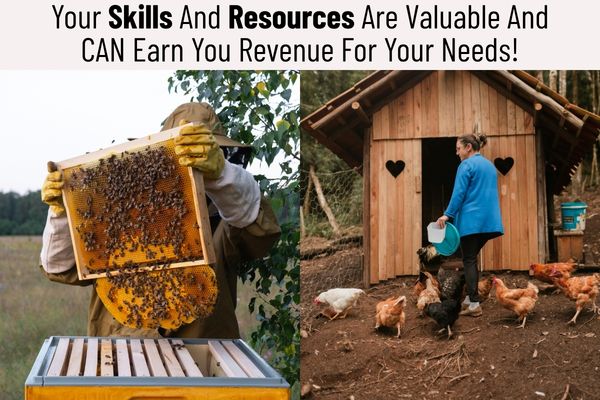
My brother-in-law, John, lives in Oregon and he had a chicken coop for a while. He was getting so many eggs, he couldn’t give them all away to friends and neighbors.
So, he set up an honor system stand in front of his house. A dozen eggs for three bucks. He raked in the cash for a few years.
One of the biggest advantages of livestock is that it often pays out in multiple ways. John’s chicken coop is a great example.
He got eggs for his family and sold the rest to cover feed costs and generate an extra revenue stream. Win-win.
The same goes for ducks, goats, sheep and rabbits, opening up income streams for eggs, meat and wool. Homesteaders will also pay good money for quality breeding stock.
And don’t forget about bees. My neighbor, Chris, has some hives and he does alright selling honey and beeswax. I haven’t tried making candles with beeswax yet, but it’s on my list after tallow.
Your Garden Can Be A Goldmine
If you’re like me, you plant way too much and get overrun when everything ripens at once.
Well, instead of canning everything you can’t eat and give away, you have another income source staring you in the face.
Tomatoes, peppers, zucchini, cucumbers, beans, bell peppers, hot peppers, herbs, garlic and whatever else you’re growing. Set up a stand in a local market and people will buy them.
Take a step back and you can even sell seedlings. It costs just pennies and some time.
Same goes for if you have apple, peach, pear or other fruit trees. Instead of constantly complaining about picking up rotten ones off the ground because you can’t eat them fast enough, sell them.
You won’t get rich, but you will have more money coming in.
Make And Sell Stuff People Want
Now that I’m a candlemaker… sorry couldn’t help myself there. But people are always looking to buy things like candles, soap, leather goods, woodworking, knives, herbal products, preserves and jams, tallow items and so much more.
So, if something like that is in your wheelhouse, boom. New revenue generator.
I’m not much of a woodworker, but if you are, you can transform fallen trees into furniture, cutting boards, or interesting decorative pieces.
Beekeepers and livestock owners can make candles out of beeswax and tallow.
Hides can become knife sheaths, belts, pouches, or other gear for the leather makers out there.
I should try my hand at these because I grow a lot of different herbs. You can dry them out for tea blends, seasoning mixes, or natural remedies and sometimes make more than selling the herbs themselves.
Raising sheep? It’s easier to just shear them and sell the wool, but you can make more by turning it into yarn, felt, or even crafts you make.
Teach What You Know
Here’s another, “if you’re like me” example. I don’t give myself much credit for what I know and do.
I could clean up teaching vegetable gardening, food preservation and survival skills. Then there’s stuff like hunting, beekeeping, animal husbandry, off-grid energy systems like DIY solar power, or whatever else may be your thing.
You can teach these at local workshops, one-on-one training, or even create online content on YouTube.
You probably don’t see it this way right now, but your experience is one of the most valuable assets you have.
Offer Your Services
If I could do it all over again, I’d become an electrician or a plumber.
People are always looking for someone to fix things or build something.
If you’re into equipment repair, welding, carpentry, tractor work, land clearing, chainsaw services, small-engine repair, or fence installation, these are some great areas to make some extra cash.
Final Thoughts
The best advice I can offer is not to put all your eggs in one basket, even if you aren’t working with eggs.
After you make your list of resources, see what jumps out at you. Think about how you can combine that with the skills you have. And then, how can you diversify?
A fallen tree isn’t just firewood, bees don’t just produce honey, and a garden doesn’t just grow vegetables.
Your best path to success is creating multiple revenue streams to help make a living off-grid. If one slows down, you have a few more keeping you going.
Personally, I would need something to supplement the gardening income after the season ends. Food preservation and teaching survival skills could pay off. Or maybe that’s where the candle-making comes in. Ask me again in a year and we’ll see how it’s going.
About the Author: Anthony Vion is a lifelong prepper from Long Island, NY, with decades of hands-on experience in self-reliance and practical skill-building. He writes about everyday prepping in a straightforward, realistic way, with a focus on simple steps that help families stay ready for the unexpected.
This article is for informational purposes only. Be sure to follow all applicable local, state, and federal laws and regulations before selling products, offering services, or harvesting resources from your property.