I remember the first time I saved beef fat. We were still living in our first apartment before we got married. It was a smallish place, so storage was pretty tight.
On the counter was a bowl of fat trimmings I’d set aside after cooking. As I was finishing the dinner dishes, over my shoulder I heard, “And, um, what are you doing with that?”
It was definitely a fair question, considering we didn’t have a dog at the time. My soon-to-be bride was also giving me that same look she does whenever she sees me picking something out of the kitchen trash that I have other plans for.
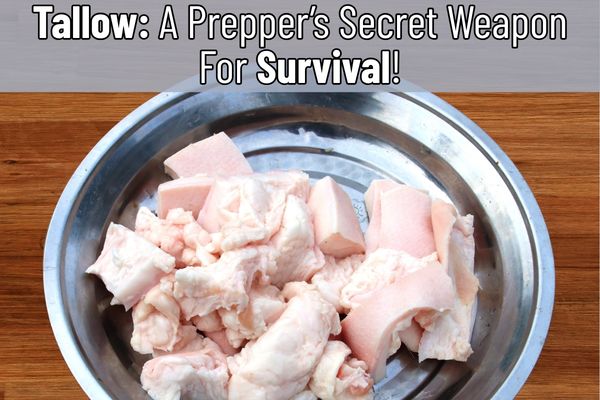
I’d been toying around with the idea of making my own tallow for a few weeks. After catching part of a documentary on it, I was pretty much blown away by how many ways you can use it.
And most people, including me at the time, just threw the beef fat away.
So, I rendered it down, strained it into a mason jar, and put it under the kitchen sink.
My maiden voyage was cooking up some potatoes in a cast iron pan with it. Absolutely delicious! Then I started adding a little to meals here and there.
It was a pretty brutal winter, and my hands were always dry and cracking. So, I rubbed a little tallow in and it really helped.
My old leather work boots had stiffened up toward the toes, and I was able to soften them up a bit just by rubbing a little tallow in. Just a little though. I made the mistake once of using too much and it left a dark spot.
That jar lasted a long time.
Sure, it’s just rendered beef fat. But it’s one of the most useful things on my shelf now.
Why Tallow Earned A Spot On My Shelf
I use it for everything from cooking to protecting my gear to taking care of my horribly dry, cracked hands.
To start, we’re talking nine calories per gram. That’s some serious energy packed in a tiny portion. Double what you’re going to get from protein or carbs.
It adds real flavor to everyday meals. I use it in potatoes, eggs, beans, rice, roasted vegetables, soups, stews, and my famous skillet cornbread.
Try it for browning meat, too. You’ll thank me later.
It’s a solid shelf-stable fat. It keeps for up to a year. It takes up hardly any space. And you don’t have to find room in your fridge for it. Yes, please.
My wife told me a few years ago that tallow is filled with vitamins A, D, E, and K. When I asked her what that meant exactly, she said they’re critical for immune function. So, tallow has that going for it, too.
For cast iron cookware, you’re going to wonder how you went all these years without it. The seasoning is exceptional and when you wipe a thin coat on your skillet after washing it, it’s even better the next time. Helps prevent rust, too. You won’t catch me camping without it.
That was enough to sell me, but I’m not even close to done.
I never thought I’d say the words tallow and moisturizer in the same sentence, but…
For years, the skin on my knuckles and fingertips would crack the first time I spent any time out in the cold. I tried everything from aloe to sleeping with cotton gloves packed with Vaseline. Nothing works better for soothing and healing than tallow for me. Elbows, heels, feet. Try it on any dry patch you have.
I’ve used it to help prevent windburn on nasty days and at night around the firepit, so mosquitos leave me alone. They don’t like it.
Speaking of firepits, tallow is great for getting fires started. I’ll soak a bit into some wood shavings at the bottom of the pit and fire her up. It burns slow and hot. Plus, you get the added bonus of that savory smell. Although it always makes me hungry.
I have a pair of leather gloves where one of the pinkies always stiffens up in the cold. They’re not that old, either. A little tallow loosened that up. Much more comfortable now.
My leather belts, sheaths and boots get a little dab now and then to help waterproof them. I’ve noticed a lot less cracking. Yep.
It’s a great rust-preventer. I used to hate going into the shed and grabbing a pickaxe or square shovel I haven’t used in ages and seeing signs of rust on it. Then I’d have to get the steel brush and spend a half hour scrubbing it off.
Now, I wipe down my survival knife, shovels, axes, hammers, wrenches, pretty much anything you can think of that’s getting put away after cleaning them with a light coat of tallow.
I put it on hinges, like when the basement door starts making horror movie noises. Fasteners also, to keep them in good working order. Makes a lot less of a mess than WD-40.
You can use it to make soap. I was kind of shocked by that one, too.
And yes, you can even use it for lighting. People have used tallow for hundreds of years to make candles, although I don’t. Not much of a candlemaker.
How To Make It
Doesn’t get much easier. If you cook beef, you’re already halfway there.
I just trim off the fat, chop it up in smaller pieces and put it in a pot on low heat.
It generally takes a couple of hours or so for the fat to break down. Once the solid pieces shrink and the liquid turns clear, you are almost home.
What I do then is strain everything real good into a mason jar. What’s left inside is a clean, golden liquid fat.
Then once it cools, right on the shelf it goes.
Easy-peasy.
A Little Goes A Long Way
A spoonful for cooking here, a light coat on my cast iron skillet there. A little for my dry hands when I’m coming out of the cold or some love for my leather boots.
A single jar lasts me for months. Then when I’m running low, the next time we have steak or a roast, I just make another batch.
And when I think about all the money I’m saving on cooking oils, butter, lubricants, aloe, Vaseline, waterproofing sprays and more, I smile.
Not that I’m replacing things entirely, but I’m definitely using less of them now.
Final Thoughts
“Hey, Vion. Beef fat is going to be the thing on your shelf that you use the most for dozens of different things.”
Yeah, I would have laughed too if someone said that to me before I made my first batch of tallow.
It’s still funny, but not in the “ha ha” way. It’s like that old quote. “It’s funny because it’s true.” Not even sure who said that first, but it’s one of my favorite sayings to this day.
Tallow makes everything taste better. It helps keep my gear in good shape. The skin on my hands thanks me every winter. And who knows, maybe I’ll try my hand at making candles with it. Ah, probably not.
That mason jar has been sitting on my shelf, or under the kitchen sink, for over twenty-five years now.
And honestly, I couldn’t imagine reaching for it and it not being there.
BIO: Anthony Vion is a lifelong prepper from Long Island, NY, with decades of hands-on experience in self-reliance and practical skill-building. He writes about everyday prepping in a straightforward, realistic way, with a focus on simple steps that help families stay ready for the unexpected.
This article is based on personal experience and is intended for general informational purposes only. Every household and situation is different, so use your own judgment, follow safe food-handling practices, and test what works best for your needs before relying on it.