I put pemmican just above beef soup cubes in this category and a few miles ahead of hardtack because I almost lost some teeth on my first voyage with it.
You may have heard the name dropped here or there, but odds are you may not really know what it is.
Well don’t feel so bad because in its heyday, it was the food that fueled explorers, fur traders, Native American tribes, and frontiersmen for generations.
Yep, quite some time ago.
I was in my early twenties the first time I tried it. I was visiting my friend, Aaron, in upstate New York in a little town called Vernon. His dad would make a batch every few months and I was lucky enough to get there when it was coming hot out of the oven.
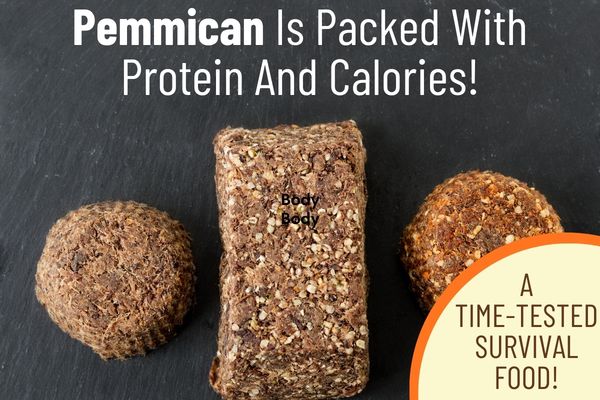
It’s pretty simple, really. Dried lean meat and rendered animal fat. Aaron’s dad threw in some dried blackberries as well. Generally, he said he would use whatever kind of berries he had around for some added flavor. They had to be dried though.
I liked it. And when I heard it could last for years when properly prepared and stored, I liked it even more.
More Reasons To Like It
It’s the ancient version of grab-and-go food. No need to refrigerate it. And because it combines protein and fat, pemmican packs a lot of energy into a pretty small package. No wonder those explorers always had it with them.
If you can dry meat and render fat, you’re most of the way there.
And you can take it anywhere. Toss some in your bug out bag, camping supplies, or your vehicle emergency kit. And don’t worry about forgetting about it because you’ll probably find it again long before it goes bad.
It doesn’t take up much room and it’s not loaded with preservatives you can’t pronounce. You only need a few simple ingredients and it’s easy to make.
What’s not to like?
A Brief History
A long time ago in a land not-so-far away, indigenous tribes right here in North America were looking for a way to preserve the buffalo, deer, elk, and whatever other meats they brought home from hunting trips.
So, they dried the meat and combined it with rendered fat and what they got was a high-calorie, super-durable food source. Pemmican.
Like my grandma’s tomato sauce and my friend Sal’s grandma’s tomato sauce, the exact recipe varied from region to region. Some flavored it up with dried berries. Others stayed “plain Jane” with just meat and fat alone.
And not to get off topic, but my grandma’s sauce was better. Sorry, Sal.
But whatever the recipe, they both accomplished the same thing. A way to stretch the most out of a successful hunt and still eat long after the fresh meat was gone.
Hundreds of years later, not much has changed. Dry the meat, render the fat, combine the two, and you end up with powerhouse food in your pantry.
OK, So How Do I Make It?
Choose your lean meat.
I go for venison whenever my friends Nick or Aaron bring some back for me from a hunting trip. But most of the time, it’s beef. You can choose elk or bison, too if you want. I tried alligator pemmican once in Florida. Pretty good. Never tried ostrich though. Adding that to the list.
But no matter what meat you go with, the mantra is always “the leaner, the better.”
This next step is where I blew it the first time. Dry the meat real good. You want to get all the moisture out. I dry it in the oven, setting the temp low. If you have a food dehydrator, that works well.
I was reading that some people still air-dry meat. I wouldn’t.
When you’re done, it should be very dry and brittle. Then it’s time to grind your dried meat into small pieces.
You could use stones or wooden tools like the indigenous tribes did way back when, but you’ll look silly and it will take too long.
The blender works for me. I keep talking about investing in a grinder but haven’t gotten there yet. Food processor works, too. It should look like a coarse powder or small flakes when you’re done.
Now, the part I hate the most because it takes the longest. Time to render the fat. Heat it slowly. Slower. Slower. You’re not frying it.
Give it time to separate from any bits of meat, tissue, and moisture that may still be hanging around. As it’s melting down, you’ll notice small pieces sinking to the bottom and the liquid fat should be turning clearer.
The finished tallow should look clean and fairly clear when it’s hot. Once it cools, it should be a creamy white or off-white.
OK, time to put it all together. Mix the fat with the dried, ground meat until everything is evenly coated. I like to do it while the fat is still warm and still mostly liquid. It just makes everything a lot easier.
I kind of just eyeball it and use roughly the same amount of meat and fat. I guess it also depends on how firm you want your mx to be. Too much fat and it’s way too greasy for me, though.
Here’s where you can throw in some dried berries if you want. Sometimes I do, sometimes I don’t.
Almost done. Now you can press the mixture into bars, blocks, or just small portions. There’s not really a right or wrong way.
Then let it cool before storing using airtight containers and a cool, dry place.
City Prepping has a great YouTube video if you’re interested.
Common Mistakes To Avoid
The biggest of all is using fatty meat. Do that and you’re not going to get anywhere close to all those years of shelf life out of it.
Not getting all the moisture out is a close second. Take your time during the drying stage.
Something I have to keep reminding myself, rushing the fat rendering process is a no-no.
And I guess one of the biggest myths I’ve seen online is that pemmican lasts forever. Nothing does. If it’s been in your pantry for more years than you can remember, maybe it’s time to say goodbye and make another batch.
Final Thoughts On Pemmican
Is Pemmican worth making? For me, it’s a big “absolutely.”
I still remember sitting in Aaron’s kitchen and half-expecting having to power through my first bite just to say I tried it. But not even close. It was dense, a little rich, and those dried blackberries gave it a sweetness I never would have thought would work.
What stood out more than anything was how simple it was. No “enhanced flavor profile.” I hate that phrase. Just meat and fat giving you the calories you’re looking for.
That stuck with me.
Every time I make pemmican, I smile a bit thinking this is what kept explorers alive all those years ago. And when I take a bite, I smile again knowing that it’s not hardtack and not going to break my teeth.
About the Author: Anthony Vion is a lifelong prepper from Long Island, NY, with decades of hands-on experience in self-reliance and practical skill-building. He writes about everyday prepping in a straightforward, realistic way, with a focus on simple steps that help families stay ready for the unexpected.
This article is for informational and educational purposes only. Food preparation and storage methods should always follow safe handling practices. Be sure to verify all techniques, ingredients, and storage conditions before consuming any homemade food products.